
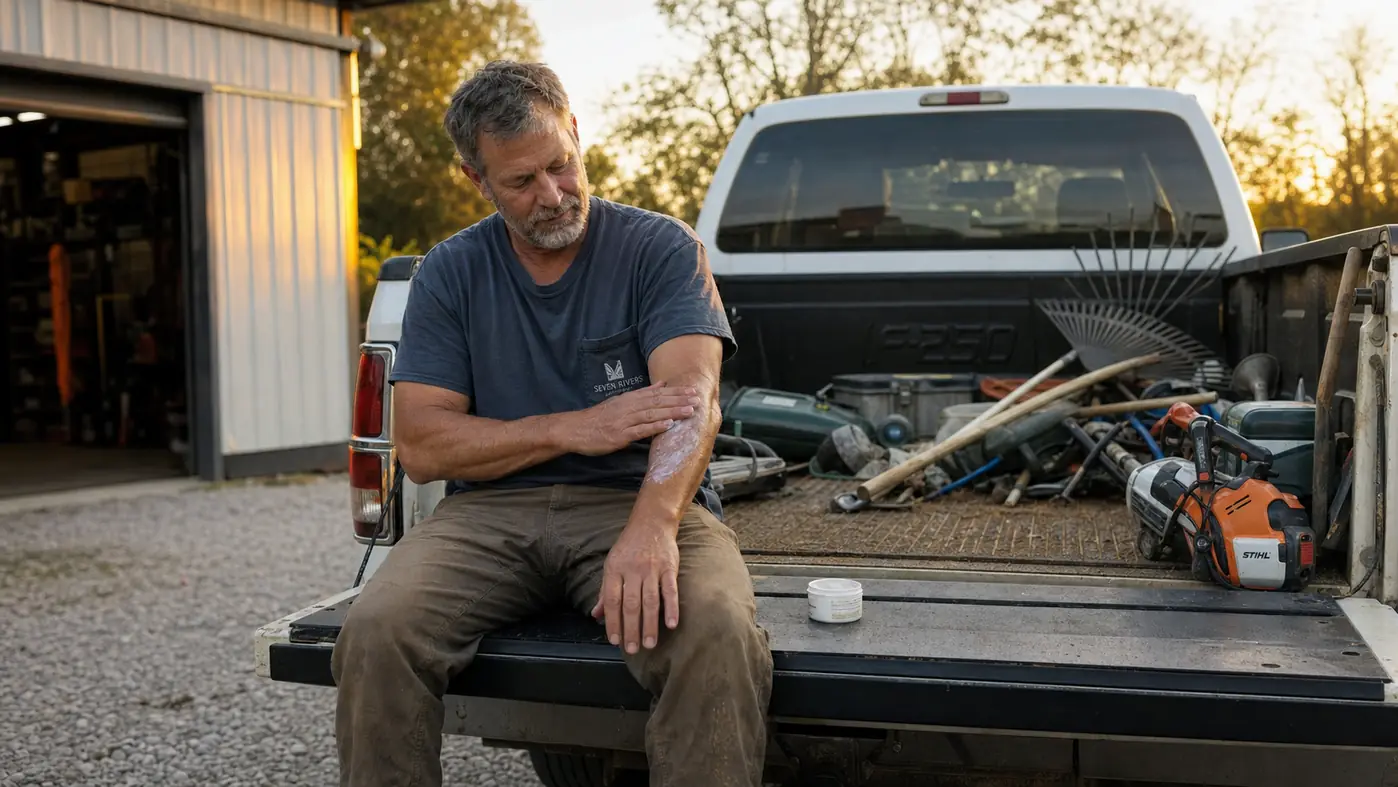
My alarm goes off at 5:15 four mornings a week, and by 5:45 I'm under a barbell in my garage before the first landscaping job of the day. Squats, deadlifts, overhead press, whatever the schedule calls for, then I'm loading the trailer by 6:30 with a body that already knows it's going to be sore later. Sore muscles after a workout used to just be something I lived with until I started applying a menthol rub the right way, instead of squeezing some Bengay onto whatever ached that evening and hoping for the best.
There's an actual order to getting real relief out of a tube of Bengay Ultra Strength Cream, and I learned most of it the slow way, by doing it wrong first. Rub it on too late and you're chasing an ache that's already settled in. Use too much of the Ultra Strength formula your first few times and your knee feels like it's standing in a snowbank. Skip the reapplication and you're sore again by dinner. Here's the actual step-by-step I run after a lifting morning or a long day on ladders, the same one Odell and I compare notes on most Fridays before the crew shows up.
The routine starts with the tube you actually keep in the truck.
This is the same Bengay Ultra Strength Cream I use for the five steps below, kept in the truck console for whenever a lifting morning or a hard day on the crew catches up with me.
Amazon Check Today's Price on Amazon →Step 1: Apply It Within the First Fifteen Minutes After You Stop Moving
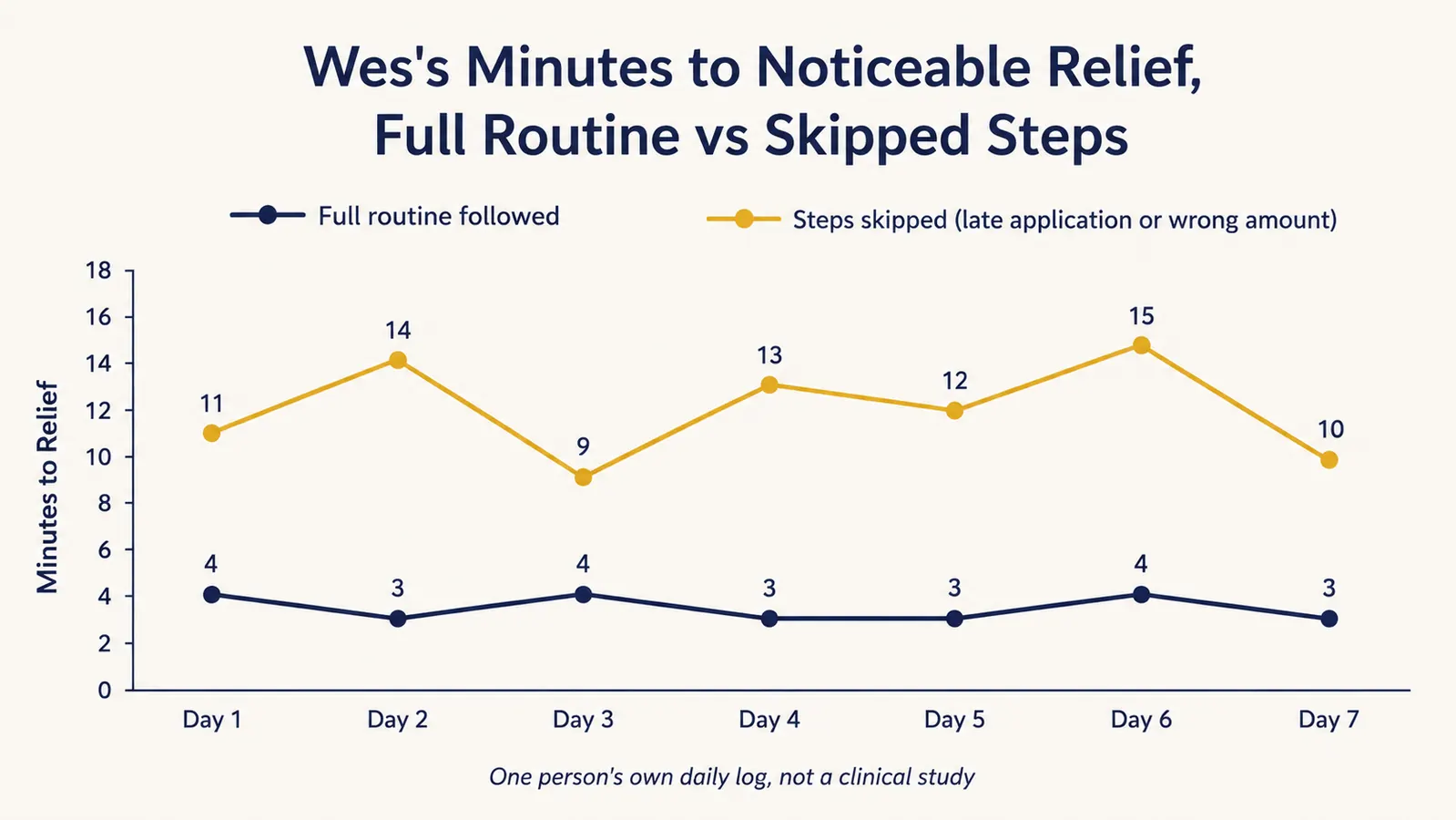
Timing matters more than most people think. I used to wait until I actually felt sore before reaching for anything, which usually meant waiting until that evening, sitting on the couch with my boots off, wondering why my lower back had already stiffened up. Now I apply Bengay within about fifteen minutes of finishing my last set or climbing down off the last ladder of a wall job, while the muscle is still warm and before it has a real chance to tighten up on its own.
The logic is simple even if I can't back it with a lab study. A muscle that's still warm from work seems to take the cream faster, and the cooling sensation lands harder when the skin is already flushed from effort. Wait a few hours and you're applying it to a muscle that's gone cold and stiff on its own, and in my experience the same amount of cream just doesn't do as much. If I've got five minutes at the tailgate before I get back in the truck, that's when it goes on, not after a twenty minute drive home.
The other piece of that fifteen minute window is where I am when it happens. I used to wait until I was back in the driveway at home, which on a bad day meant almost an hour had passed since I climbed down off the last ladder. Now I keep the tube in the truck console specifically so I can apply it at the job site itself, right there on the tailgate before I even finish loading the last tool. That single change probably matters more than anything else on this list, since it's the difference between treating a muscle that's still warm and treating one that's already gone cold and stubborn.
Step 2: Use a Dime to Quarter Sized Amount and Rub It In Fully
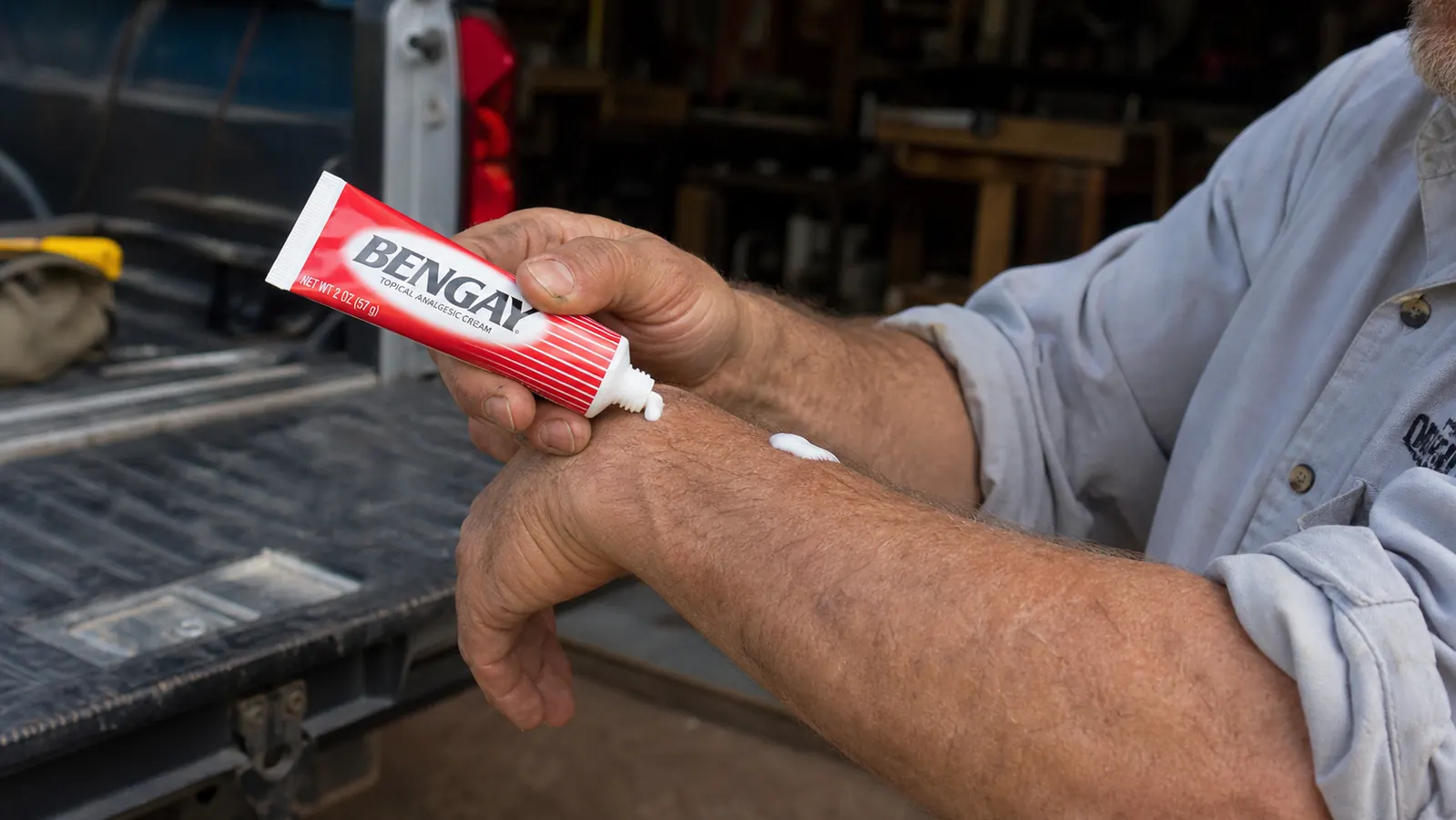
The Ultra Strength formula is a lot more intense than the regular Bengay I used back in college after baseball practice, and the first week I used it I found that out the hard way. I put too much on my knee and ended up feeling like I'd stepped in a snowbank for twenty straight minutes. A dime to quarter sized amount, depending on the size of the muscle group, has been the right call ever since.
Rubbing it in matters almost as much as the amount you use. I used to just smear it on and move on, and the cream would sit on top of the skin instead of actually working in. Now I take an extra thirty seconds to massage it into the muscle, small circles working outward from the sorest point, before I get back to whatever I was doing. It's not scientific, it's just what I do now, but the relief feels more even across the whole area instead of one hot spot where I happened to pile it on thickest.
I also learned to wash or wipe my hands before I apply it, which sounds obvious until you've had a full day of trimming and mowing behind you. Grit and sap on your palms mixes into the cream, and you end up rubbing debris into your skin along with the menthol. A quick wipe with the rag I keep on the truck seat takes ten seconds and saves the aggravation later.
Step 3: Cover the Whole Muscle Group, Not Just the Loudest Spot
For a long time I made the mistake of only treating the exact spot that hurt worst, which on a Thursday is usually one specific knot low in my back. Now I cover the whole muscle group instead, the full width of my lower back rather than just the one point screaming the loudest, because the muscles around it are usually tight too, even if they haven't started complaining yet.
This matters even more after a heavy lifting morning than after a day of ladder work, since a full squat or deadlift session hits your whole posterior chain, not just one muscle. I laid out the full case for treating an area this way, not just a single sore point, in 10 reasons a menthol rub eases sore muscles after training, and most of it comes straight from this same routine.
I've also started treating my forearms the same way after a day of heavy trimming, since gripping shears and a string trimmer for hours does a number on the muscles below the elbow that most people never think to treat. Covering the whole forearm instead of just the wrist has made a bigger difference there than I expected, especially on days when Odell and I are both nursing sore grips by quitting time.
Step 4: Give the Cooling and Warming Phases Time to Do Their Job
There's a real sequence to how a menthol rub works, and judging it too fast is a mistake I made early on. The first minute is almost all cooling, which is exactly what you want right after a muscle's been aggravated, like the last set of deadlifts or an afternoon of hauling paver sand. The warming builds in a few minutes later and sticks around longer, and that's the part that actually eases the deeper ache instead of just the surface sting.
I've also learned not to stack heat on top of it while it's working. I tried layering a heating pad under a fresh application on a cold morning once, thinking I'd double the relief, and it turned into a lot more heat than I wanted, fast. If you want warmth on top of Bengay, wait until the cream has finished its own cycle, usually twenty to thirty minutes, before you add anything else to the mix.
I've also noticed the sequence plays out differently depending on the muscle. My knee responds fastest to the cooling phase and barely needs the warming part to feel better, while my lower back seems to need the full cycle, cooling and then warming, before the ache actually backs off. I don't have a scientific reason for that, just six months of paying attention to which part of my body answers to which part of the process.
Step 5: Build a Reapplication Schedule Around Your Actual Day
The relief window on Bengay Ultra Strength Cream runs about twenty to thirty minutes of real cooling before it fades to a mild warmth that doesn't do a whole lot. Waiting until the ache is back before reapplying means you're always a step behind it. On a bad ladder day I've learned to reapply before the second half of the afternoon starts, not after my knee's already loud again.
Evenings are their own separate application, not just a repeat of the daytime one. I put a fresh amount on my lower back and shoulders before bed most nights now, at least an hour before I actually lie down, since Renata banned me from applying it any closer to bedtime than that more than once. I go into that whole routine, along with the rest of what six months with this specific tube looked like, in my long-term Bengay review.
Odell runs a version of this same schedule with his own tube, and between the two of us we've worked out that consistency matters more than any single application. One good rub after a hard day doesn't fix six months of a cranky knee. A schedule you actually stick to does more over time than reaching for the tube only on the worst days.
I've also started keeping a smaller travel tube in the glovebox specifically for the drive home, separate from the main one I use at the job site. Sitting still in a truck seat after nine hours of hauling mulch is its own particular kind of stiff, different from the ache that shows up mid-afternoon, and having a second tube dedicated to that window means I'm not digging through a bag for the one I already used at 2pm.
What Else Helps
A menthol rub isn't the only thing in my truck console, and I wouldn't tell you it's a complete recovery plan on its own. Sleep, actually stretching before a lifting morning instead of skipping it, and knowing when a normal ache is different from a real problem all matter more long term. Bengay is the fast, thirty-second tool for the ordinary soreness that shows up after a hard day, not a substitute for seeing Dana, my physical therapist, when something feels genuinely wrong instead of just tired. I put Bengay head to head against another popular option in Bengay vs Biofreeze, if you're trying to decide which one fits your own routine, and I get into the parts of this product that actually bothered me in my honest Bengay review. None of these five steps replace an actual diagnosis either. If a joint is swelling, locking up, or getting worse week over week instead of following the same predictable pattern, that's a conversation for a doctor or physical therapist, not another squeeze of cream. Bengay has earned its spot in my truck for the ordinary, predictable soreness a physical job hands out, and I try to be just as clear about where that spot ends.
It's not about finding a miracle cream. It's about doing the same five things in the same order every time, so the relief is actually there when I need it.
Five steps, one tube, no guesswork.
Follow this same routine with the tube of Bengay Ultra Strength Cream I keep in the truck console and see if it holds up on your own next sore-muscle day.
Amazon Check Today's Price on Amazon →