
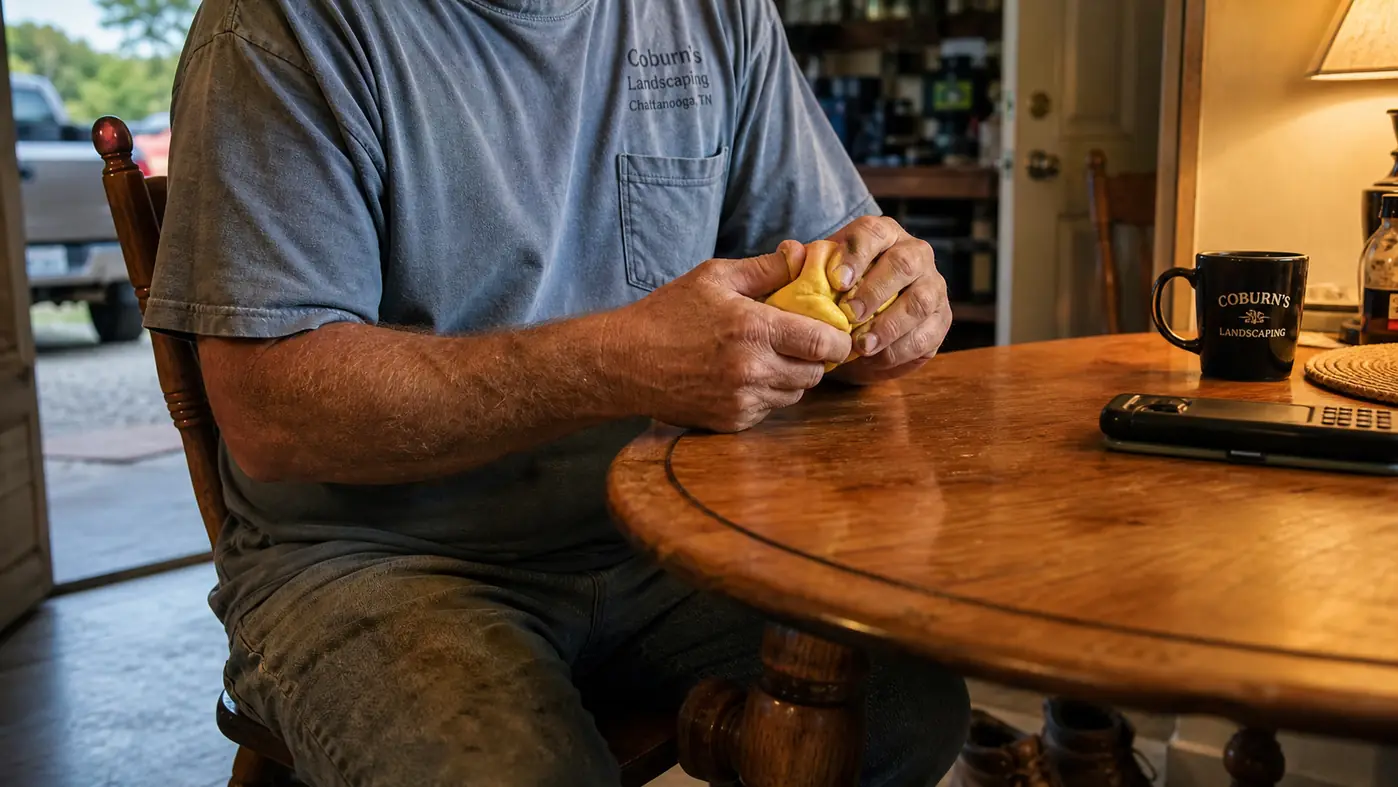
Two summers ago I tore a forearm muscle hauling wet sod off a trailer, and my wrist spent six weeks in a brace because of it. When the brace came off, my grip was a joke. I couldn't twist a jar lid one-handed, and shaking a customer's hand felt like something I had to think about. My physical therapist, Dana, handed me a set of FlintRehab therapy putty on my second visit and told me to work it every night, no exceptions. I figured it was a stalling tactic to keep me quiet between real exercises. It wasn't. It's the reason I can hold a shovel handle for nine hours again without my forearm giving out by lunch.
I still keep a full set of that same FlintRehab putty on the kitchen table, and Odell, my training partner, has run through two other rival brands trying to prove there's something better. Here are the ten reasons this stuff earned a permanent spot in my routine, not just a phase after the brace came off.
The Putty Dana Actually Prescribed, Not a Gas Station Stress Ball
Four resistance levels, one product, no guessing which one your grip actually needs this week.
Amazon Check Today's Price on Amazon →It Rebuilds Grip Strength in Levels You Can Actually Feel Change
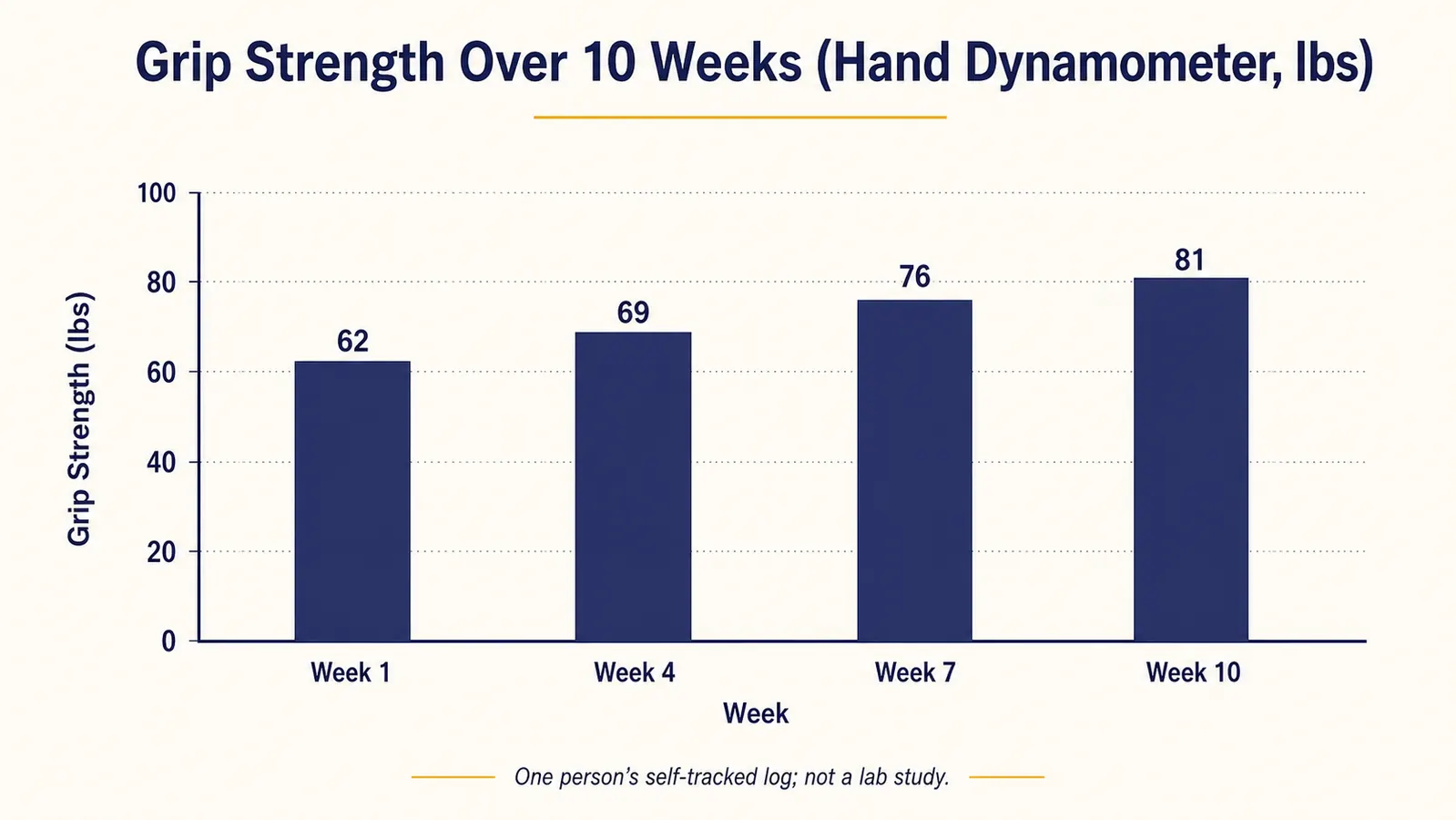
The FlintRehab 4-pack comes in four distinct resistance levels, and that matters more than it sounds like it should. When Dana started me on rehab, my grip couldn't handle anything past the softest putty without my forearm cramping. Six weeks later I'd worked through all four without thinking about it. A single ball of one resistance doesn't tell you anything about progress. Four levels of the same FlintRehab therapy putty gave me an actual measuring stick.
It Isolates Fingers the Way a Squeeze Ball Never Did
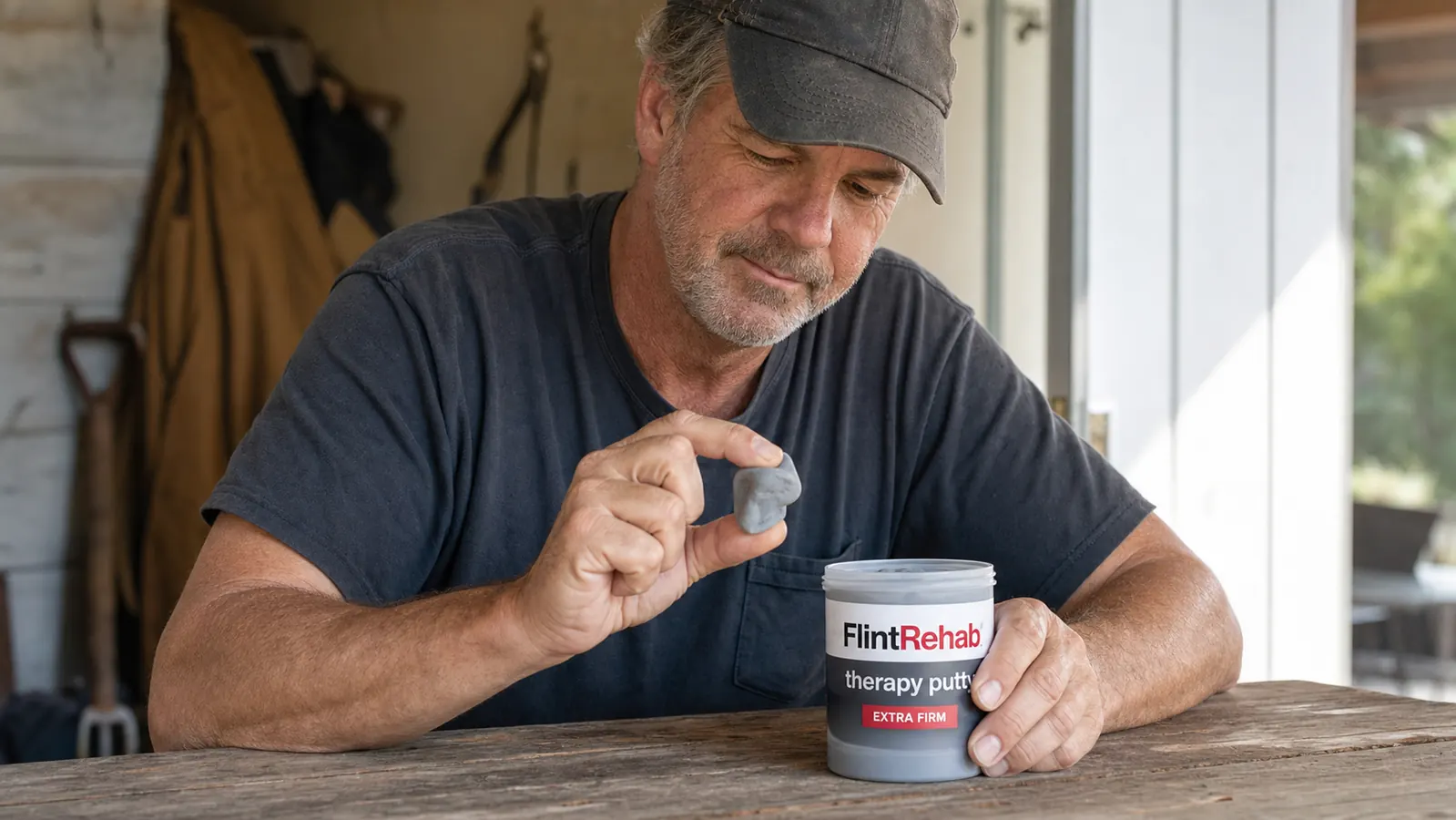
A stress ball works your whole hand as one unit. FlintRehab putty lets you pinch a small piece between just your thumb and index finger, or press it flat with one finger at a time. After the brace, my ring finger and pinky were noticeably weaker than the rest, and a squeeze ball would have let that gap stay hidden. Working each finger on its own in the putty is what actually caught it.
It Doubles as a Warm-Up Before Cold Damp Mornings
Tennessee valley mornings in the fall are cold and damp enough that my hands feel stiff before I've even loaded the trailer. Two minutes of working FlintRehab putty in the truck cab before I grab a rake handle loosens my fingers up in a way that just flexing them open and closed doesn't. It's become as automatic as starting the engine.
It Fits in a Truck Console, Not Just a Gym Bag
My F-250 has a 12V outlet and a center console just big enough for a container of putty. That matters because anything that needs 45 quiet minutes at home is useless to me. I do reps waiting on a customer to come out and pay, or sitting in the driveway before Renata calls me in for dinner. FlintRehab putty travels in a pocket. A grip trainer with springs and handles does not fit in a work truck the same way.
It Trains Pinch Strength, Not Just Fist Strength
Most grip gadgets train a closed fist. Landscaping doesn't work that way. I'm pinching pruning shears, gripping a trowel between three fingers, holding a hose nozzle with just my thumb and two fingers for an hour at a time. FlintRehab putty lets you practice a three-finger pinch directly, which is closer to what my job actually asks my hand to do than any spring-loaded grip trainer Odell has shown me.
It Gives Dana's Protocol Something to Progress Through
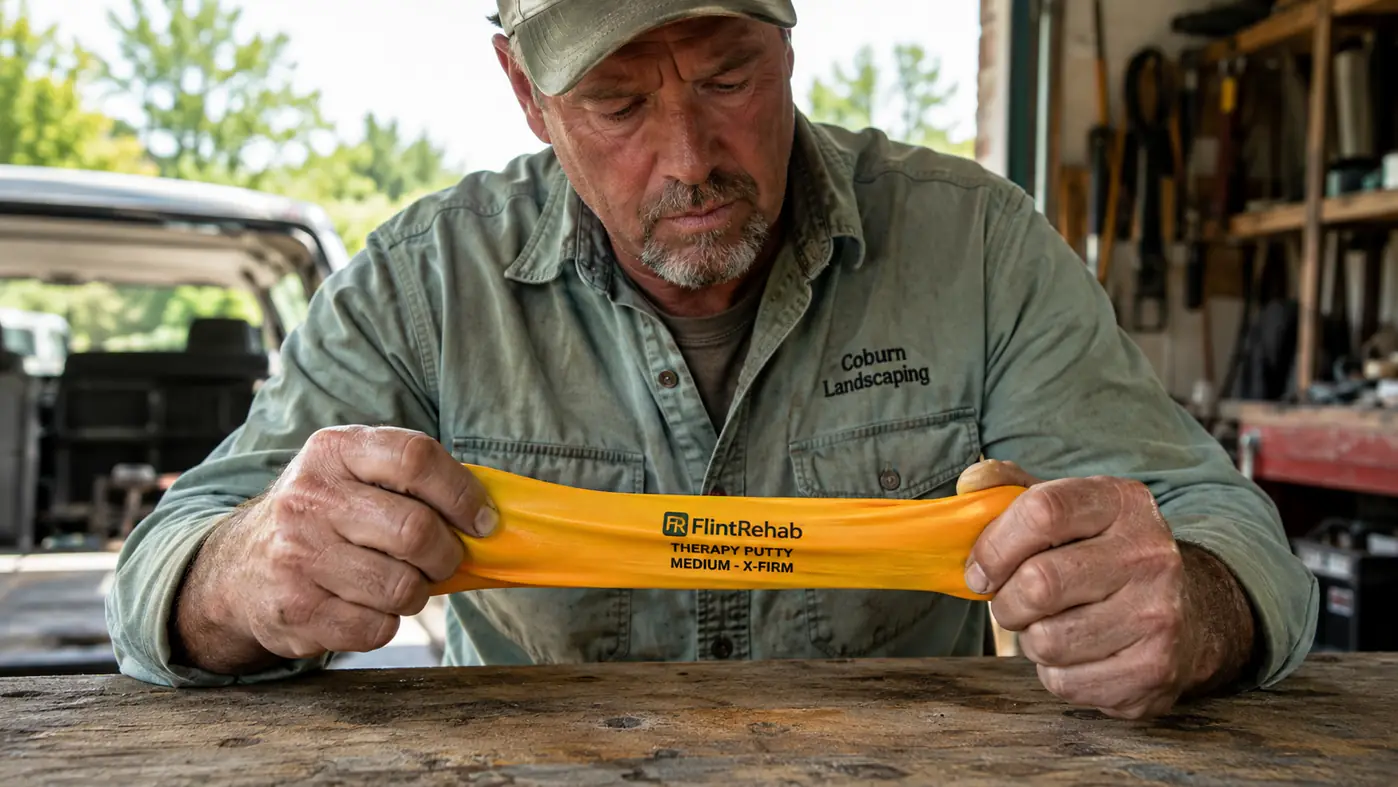
Dana built my rehab plan around moving through the four FlintRehab resistance levels on a schedule, not around a set number of reps forever. That structure is why the putty stuck as a habit instead of fading out after the brace came off. If you're working with a physical therapist or hand specialist on your own recovery, ask them directly whether a graded putty progression like this fits what you're dealing with. It isn't a substitute for their evaluation, just a tool they can build a plan around.
It Rebuilds Forearm Endurance for All-Day Grip Tasks
Grip strength for one squeeze is one thing. Holding a ladder rail, a mower handle, or a hedge trimmer for hours is an endurance problem, not a strength problem. What actually changed for me wasn't a single max-effort squeeze, it was how long I could keep gripping before my forearm burned out. Working FlintRehab putty for a few minutes most nights built that endurance back up gradually, the same way a slow forearm routine is supposed to.

It's Quiet Enough to Do While Renata Watches Her Shows
Renata is skeptical of just about every gadget I bring home, and rightly so most of the time. FlintRehab putty never made her list of complaints. It doesn't beep, it doesn't need batteries, and I can knead it on the couch during whatever she's got on without her asking me to take it outside. That sounds small, but it's the difference between a tool I actually use every night and one that ends up in a drawer.
It Held Up to Odell's Skepticism, and His Rival Products
Odell owns two other hand therapy putty brands and one spring-loaded grip trainer, and he's tried talking me into all three. His main complaint about the rivals is that the softer resistance levels get mushy and lose their bounce after a few weeks. My FlintRehab putty hasn't done that after four months of near-daily use. If you want the full side-by-side, I put Odell's rival brand through the same routine in this comparison.
It Doesn't Quit on You Like Cheaper Dough Substitutes Did
Before Dana handed me the real thing, I tried using leftover kids' modeling dough from when Trey and Jolene were younger, thinking putty is putty. It dried out in a week and cracked instead of stretching. FlintRehab putty is still soft and pliable four months in, stored in the same little tubs it shipped in. That durability is the whole reason I never went back to improvising with whatever was in the junk drawer.
What I'd Skip
I wouldn't bother with the thickest resistance level if you're starting rehab fresh out of a brace or cast. Dana had me skip straight past it for the first month because my forearm wasn't ready, and pushing into it too early just left me sore the next morning without adding any real strength. Start soft, work up. I'd also skip trying to substitute it with dough, clay, or anything from a craft aisle. I already tried that route and it costs you more in frustration than it saves.
A single ball of one resistance doesn't tell you anything. Four levels gave me an actual measuring stick for a grip I'd stopped trusting.
Six Weeks in a Brace Taught Me Not to Skip This Part of Rehab
If your grip has gone soft after an injury, a long layoff, or just years of gripping tools all day, this is the tool Dana still has me using.
Amazon Check Today's Price on Amazon →