
Nobody selling a StrongTek Wooden Slant Board tells you it smells like a lumber yard for the first three days. I cracked the box in my garage, and between the raw pine and whatever finish they use, I ended up leaving the door open overnight just to air it out before I'd stand on it barefoot. That's a small thing, but it's the kind of detail that never shows up in a five-star review written the day the box arrived, and it's exactly the kind of thing I want to get into here.
This isn't the long-term diary of four months of daily use, that's a different piece I already wrote. This is the honest version, the one where I tell you about the stiff adjustment pin, the paint can I knocked over, and whether the whole thing is actually worth what StrongTek is asking for a piece of wood with three notches cut into it. Short answer, mostly yes, but there's real friction between unboxing and the point where it becomes routine, and almost nobody mentions that part.
The Quick Verdict
A genuinely solid, honest incline tool once you push through a rough first week and a few surprises the listing photos never show you.
Amazon Check Today's Price →Tight calves before you've even loaded the truck? Here's what actually loosens them.
I'll walk you through every annoyance first, then tell you why it's still in my garage six weeks later. See today's price and current availability on Amazon before you decide.
Amazon Check Today's Price on Amazon →How I've Used It
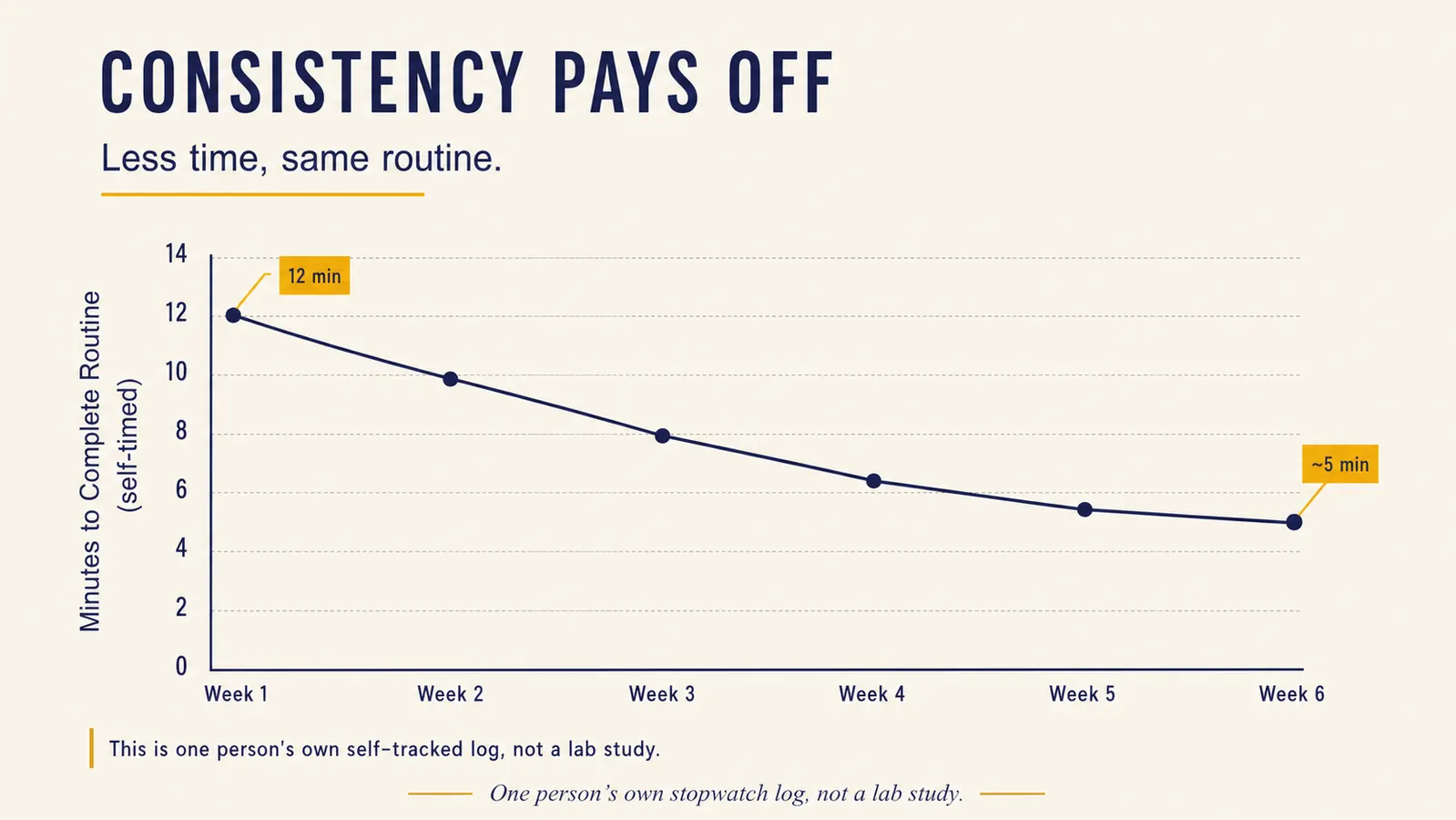
I use the StrongTek board most mornings before I head out with the crew, standing on it in the garage in a pair of thin socks because my work boots don't grip the wood surface the way bare feet or socks do. It's a routine now, five minutes, maybe less on a good day. It was not five minutes in week one. The first week I spent more time fighting the adjustment pin and figuring out where to put my feet than actually stretching, and if I'm being straight with you, that first week nearly talked me out of keeping it.
What changed my mind wasn't a sudden breakthrough, it was just repetition. By week three the pin slid easier, my feet found the same spot on the board without me looking down, and the whole thing stopped feeling like a chore I had to think through. I started timing myself out of curiosity more than anything, and the drop from a clunky twelve minutes down to a tight five was honestly steeper than I expected. Nobody tells you there's a real adjustment period here, they just show you a calm morning routine video like it was five minutes from day one.
If you want the version of this where the payoff mattered most, the morning my Achilles finally stopped catching on the first ladder rung, I told that whole story separately in how a wooden slant board got me through Achilles tightness. This piece stays focused on the rougher edges, because that's the part almost nobody writes down.
Assembly Out of the Box
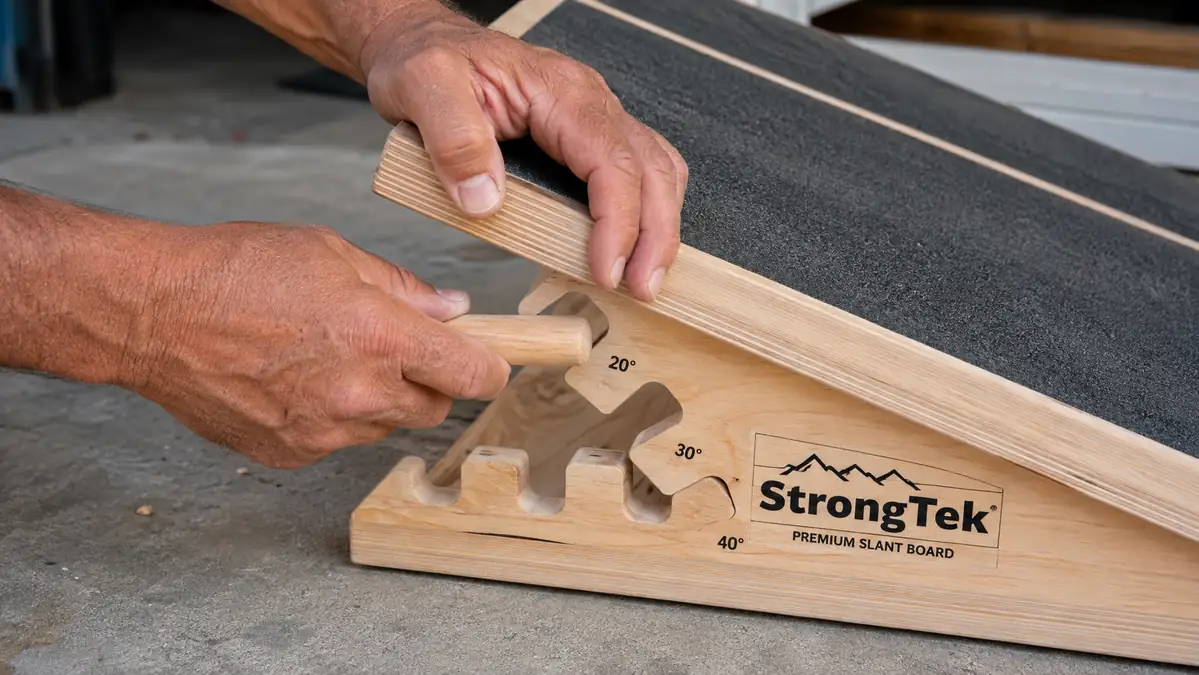
The StrongTek board shows up mostly assembled, which I appreciated, but not entirely. Both side handles arrived with the mounting bolts snug rather than tight, and I ended up going over every bolt with my own hex key before the first use because one handle had a noticeable half-turn of play in it. That's a five-minute job, but nobody mentions it in the description, and if you're the type who trusts a listing that says assembly required minimal effort, budget the extra few minutes anyway.
The one real snag was a screw hole on the underside bracket that didn't quite line up with its partner. It wasn't off by much, maybe a sixteenth of an inch, but enough that the screw wanted to bite at an angle instead of going in straight. I got it seated fine with a little patience, and it hasn't loosened since, but it was the one moment in the whole unboxing where I wondered if I'd gotten a slightly off unit. For what it's worth, Odell's StrongTek board, bought separately a few weeks later, went together without a hitch, so I'd chalk mine up to normal manufacturing variance rather than a pattern worth worrying about.
The Learning Curve Nobody Mentions
The first time I stepped onto the steepest angle without easing into it, I nearly went off the back of the StrongTek board reaching for a side handle that wasn't quite where my hand expected it to be. My training partner Odell had the same moment his first try, and he's 61 with better balance than most guys half his age. That's not a knock on the product, standing on any incline for the first time messes with your inner ear a little, but the listing photos of someone calmly standing there with a relaxed smile do not prepare you for how unstable that first session actually feels.
Boots make it worse, not better. I learned that the hard way trying to save time one morning by stepping straight on in my work boots instead of changing into socks first. The tread grabbed unevenly on the wood and I ended up sliding my heel off the edge entirely. If you're planning to use this StrongTek board quickly before work like I do, budget the extra thirty seconds to swap footwear, because skipping it is how you turn a stretching routine into a genuine fall risk.
There's also a sizing quirk nobody flags in the reviews I read before buying. I'm a solid 5 foot 11, and the side handle height works fine for me, but Odell is a few inches shorter and finds himself hunching slightly to keep a grip on the handles at the steepest angle. It's not a dealbreaker, but if you're notably shorter or taller than average, don't assume the handle placement will feel as natural for you as it does in the demo photos.
Floor Grip Is Better Than Expected, With One Catch
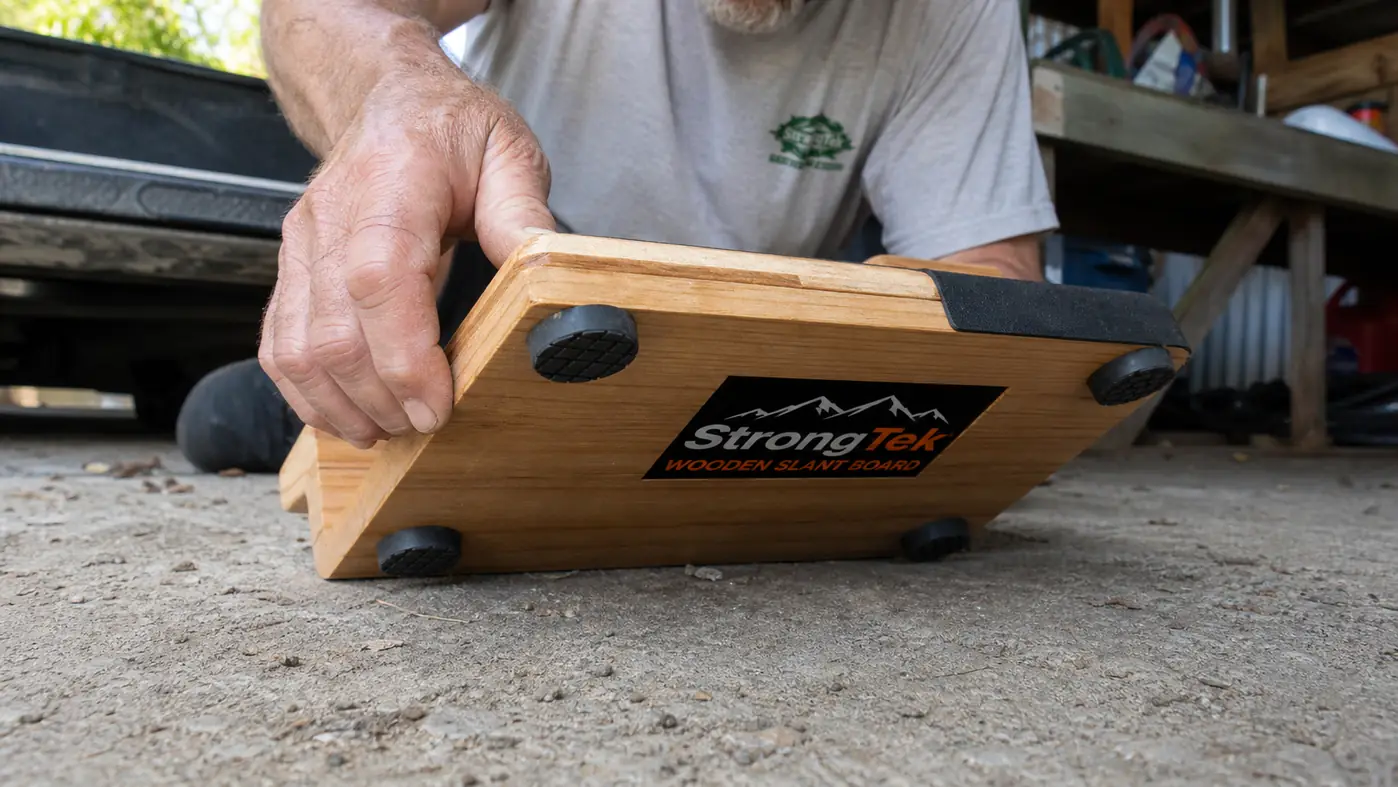
My garage floor is bare concrete covered in the usual mower clippings and yard dust, and the StrongTek board's underside pads have held their footing on it without sliding, even when I'm leaning hard into the steepest setting. That part genuinely impressed me, because I half expected concrete dust to work its way under the pads and turn the whole thing into a hockey puck. It hasn't.
The catch is that I tried it once on the sealed epoxy floor of a buddy's finished garage, and the grip felt noticeably less confident there, almost slick by comparison to my dusty concrete. Nobody warns you that a rougher floor might actually work better for this thing than a clean, polished one. If your garage or workout space has a smooth sealed floor, it's worth testing the StrongTek board's grip carefully before you lean your full weight into the top angle, rather than assuming it'll behave the same everywhere.
Storage Is the Real Tradeoff Nobody Mentions Up Front
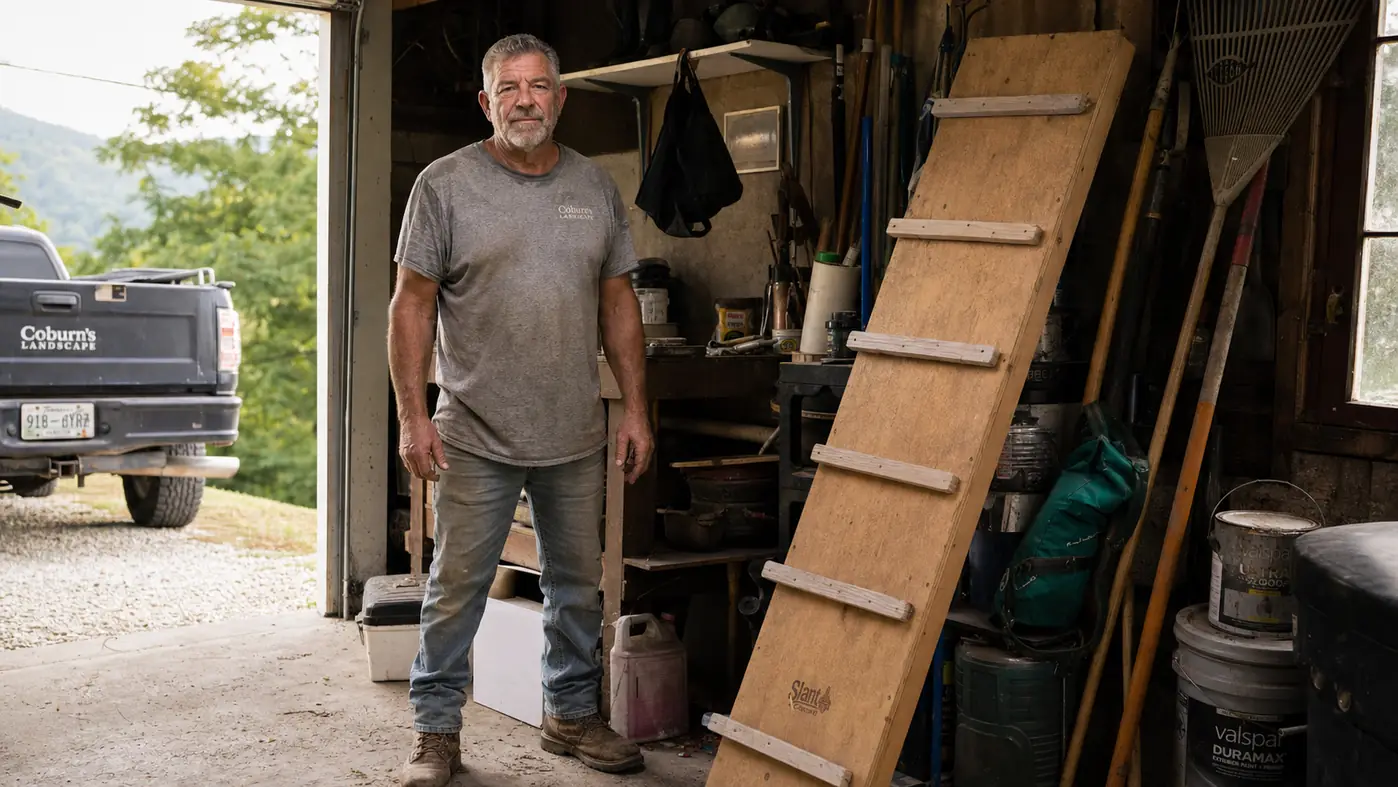
This is a solid slab of wood, and it does not fold, collapse, or slide flat under anything. I lean mine against the garage wall between uses, and about two weeks in, it tipped over when I bumped it reaching for a rake and took a can of paint down with it. Nothing broke, but it left a small dent in the wall trim that Renata noticed within about a day, and she was not shy about pointing it out.
If you're picturing something you can slide under a bed or tuck into a closet shelf the way you would a foam wedge or a folded resistance band, recalibrate that expectation now. The StrongTek board wants a dedicated corner of floor space, leaning against something sturdy, ideally not next to anything breakable. For anyone comparing this against the metal folding alternatives before buying, I laid out the tradeoffs honestly in StrongTek vs Lifepro InclineX, including the storage question specifically.
Is It Actually Worth What StrongTek Charges For It
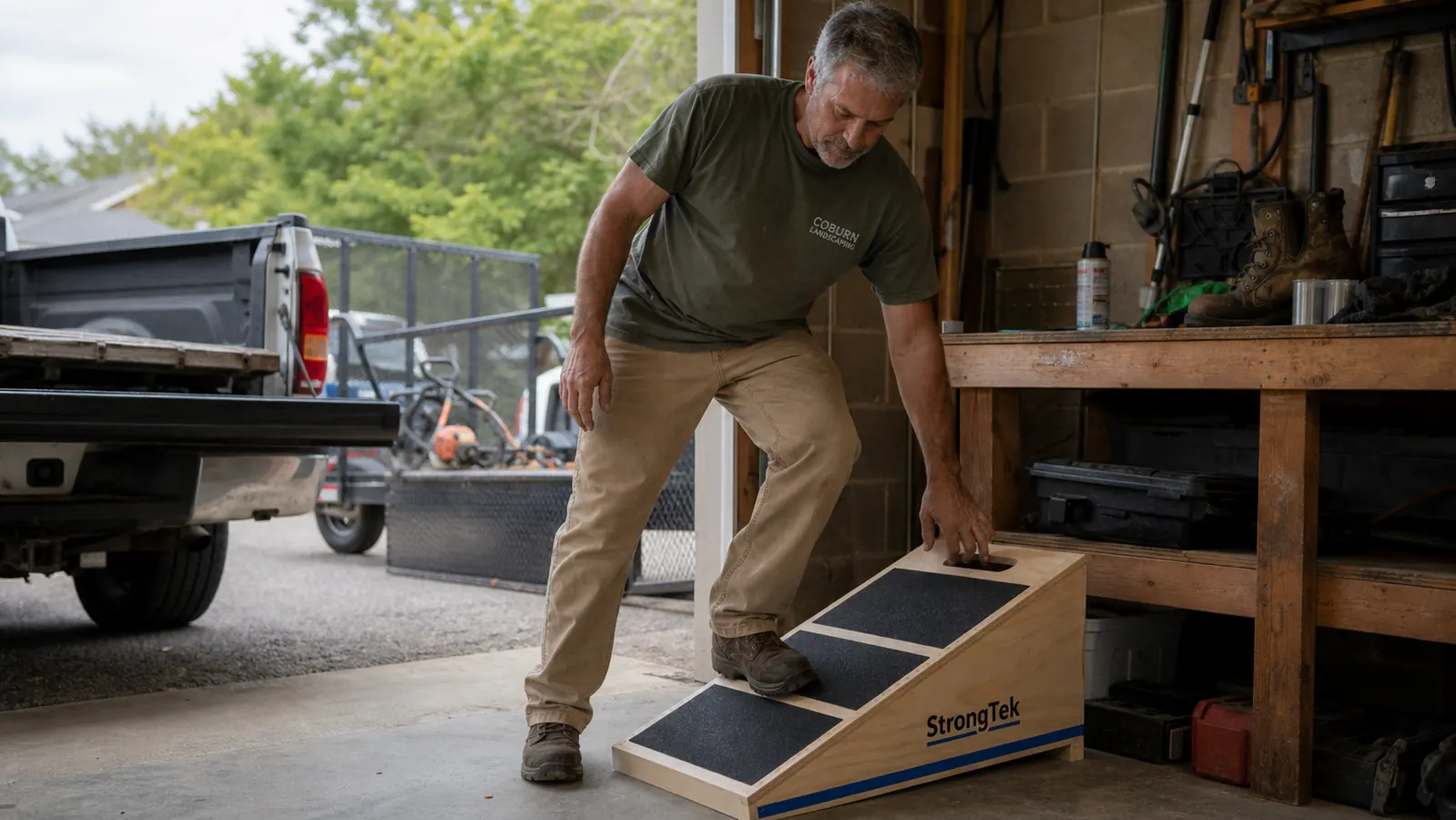
I'm not going to tell you a number, current pricing shifts and you can check that yourself, but I will tell you honestly where my head landed after six weeks. This is a simple, solid piece of wood with three notched angles and two bolted handles. There is no motor, no app, no battery, nothing that can fail electronically. For that simplicity, StrongTek is not the cheapest incline board on the market, and I went in skeptical that a wooden board could justify sitting anywhere near the price of boards with more adjustment options.
Six weeks in, my honest read is that the build quality backs it up. Nothing has loosened, no hardware has worked its way free, and the wood hasn't warped sitting in a garage that swings from cold mornings to hot Tennessee afternoons. Whether that's worth the StrongTek premium depends on how much you value something you'll likely still be using in a year over something cheaper you might replace twice. For a full breakdown of how it's held up over a longer stretch of daily use, that's covered in my four-month long-term review rather than here.
I also looked at a cheaper foam incline wedge before committing to the StrongTek board, the kind that runs a fraction of the cost and stores flat under a couch. It works fine for a gentle stretch, but it compresses under bodyweight over time and doesn't give you the fixed, repeatable angle a solid wood board does. With 6,140 reviews and a 4.8 average sitting behind the StrongTek board when I bought mine, I figured enough other people had already stress-tested the durability question for me, and six weeks in, my own experience lines up with that number more than it contradicts it.
What I'd Have Wanted Someone to Tell Me First
Air it out for a night before you use it barefoot. Change out of your boots before you step on, every time, no shortcuts. Give yourself a full week before you judge whether the angles feel right, because the board doesn't change in that week, your balance does. And find it a permanent, sturdy spot to lean against before the first time you use it, not after you've already knocked something over figuring that out the hard way like I did.
None of that shows up in the bullet points on the product page, and honestly I don't fault StrongTek for that, most listings read that way. But if you want the fuller picture of why an incline board even helps ankle and calf mobility in the first place, before you decide whether to push through that first rough week, I'd read 10 reasons a slant board improves ankle mobility first.
What I Liked
- Solid wood build with bolted handles that has shown zero loosening or warping after six weeks
- Non-slip pads grip rougher garage concrete better than I expected, even through yard dust and grime
- Simple, no batteries, no app, nothing electronic that can fail down the line
- Once the routine sets in around week three, it genuinely takes five minutes or less
Where It Falls Short
- Strong raw wood smell out of the box that needs a day or two to air out before comfortable barefoot use
- The adjustment pin is stiff and loud at first, and the steepest angle is a real balance test for week one
- Doesn't fold or store flat, it needs a dedicated leaning spot or it can tip over
- Grip felt noticeably less confident on a smooth sealed floor compared to rough concrete
- Side handle height may not suit shorter or taller users as naturally as the product photos suggest
The listing photos show a calm five-minute stretch. Nobody shows you the stiff pin, the dinged paint can, or the week your balance has to catch up to the wood.
Who This Is For
This is a good fit if you're willing to push through a genuinely awkward first week or two to get to a routine that eventually takes five minutes and asks nothing else of you. It suits anyone who values solid, simple construction over adjustability, and who has a real spot in a garage or spare room where a wooden board can live leaning against a wall without becoming a hazard. If your calves and Achilles are tight before the workday even starts the way mine are, and you'd rather own the thing outright than subscribe to an app that tells you how to stretch, the StrongTek board earns its keep.
Who Should Skip It
Skip it if you need something that folds flat, fits in a closet, or travels in a bag, this is a solid wood board and it stays that way. Skip it if you have a smooth, sealed floor and no rougher surface to test the grip on first. And skip it, or at least talk to a physical therapist first, if you've had a recent ankle sprain or balance issue, because that rough first week of finding your footing is real, and it's not the week to be testing a new joint injury on a steep incline. I'm not a doctor, and this board is not a substitute for one.
Six weeks later, the smell is gone and the routine finally is too.
It wasn't love at first stretch, but it earned its spot in my garage. See current stock and today's price on Amazon.
Amazon Check Today's Price on Amazon →