
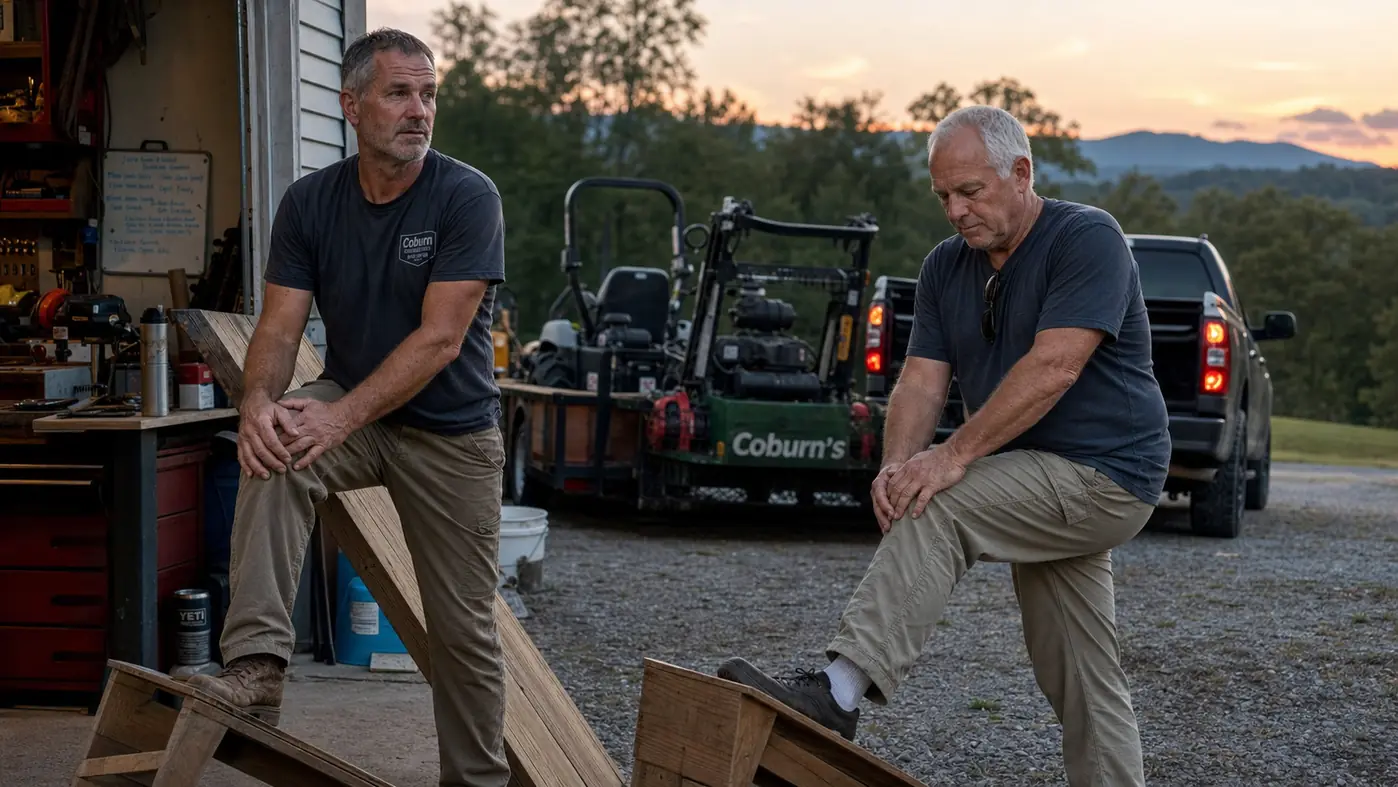
My right Achilles has had an opinion about ladder mornings since I was maybe forty-five. Nine hours a day on my feet running a landscaping crew here around Chattanooga will do that to a guy, especially the weeks we're on the mower decks or up and down extension ladders trimming the tall stuff. Four months ago my wife Renata, who is a nurse and rolls her eyes at close to ninety percent of what I buy off the internet, actually didn't fight me on this one. That's how I ended up standing on a StrongTek Wooden Slant Board in the garage every morning before the truck even leaves the driveway.
I'd tried the usual calf stretch against a porch step for years without much to show for it besides a stretch that barely got under my Achilles. The StrongTek board is just a solid wood incline with three fixed angle settings and side handles, no motors, no batteries, nothing to charge and nothing to sync to a phone. That plain simplicity is exactly why it's still sitting in my garage four months later instead of in the bin with the other gadgets Renata warned me about. This is the long version of what changed, and what honestly didn't.
The Quick Verdict
Four months of daily use on a 56-year-old landscaper's beat-up ankles: real relief on ladder mornings, a genuine week of wobbling before my balance caught up, and wood construction that hasn't budged, squeaked, or split once.
Amazon Check Today's Price →If your calves are tight before you've even left the driveway, this is worth five minutes.
I'm not selling you a miracle, just five minutes on an incline before the truck starts. Check today's price and current availability on Amazon before you decide.
Amazon Check Today's Price on Amazon →How I've Used It
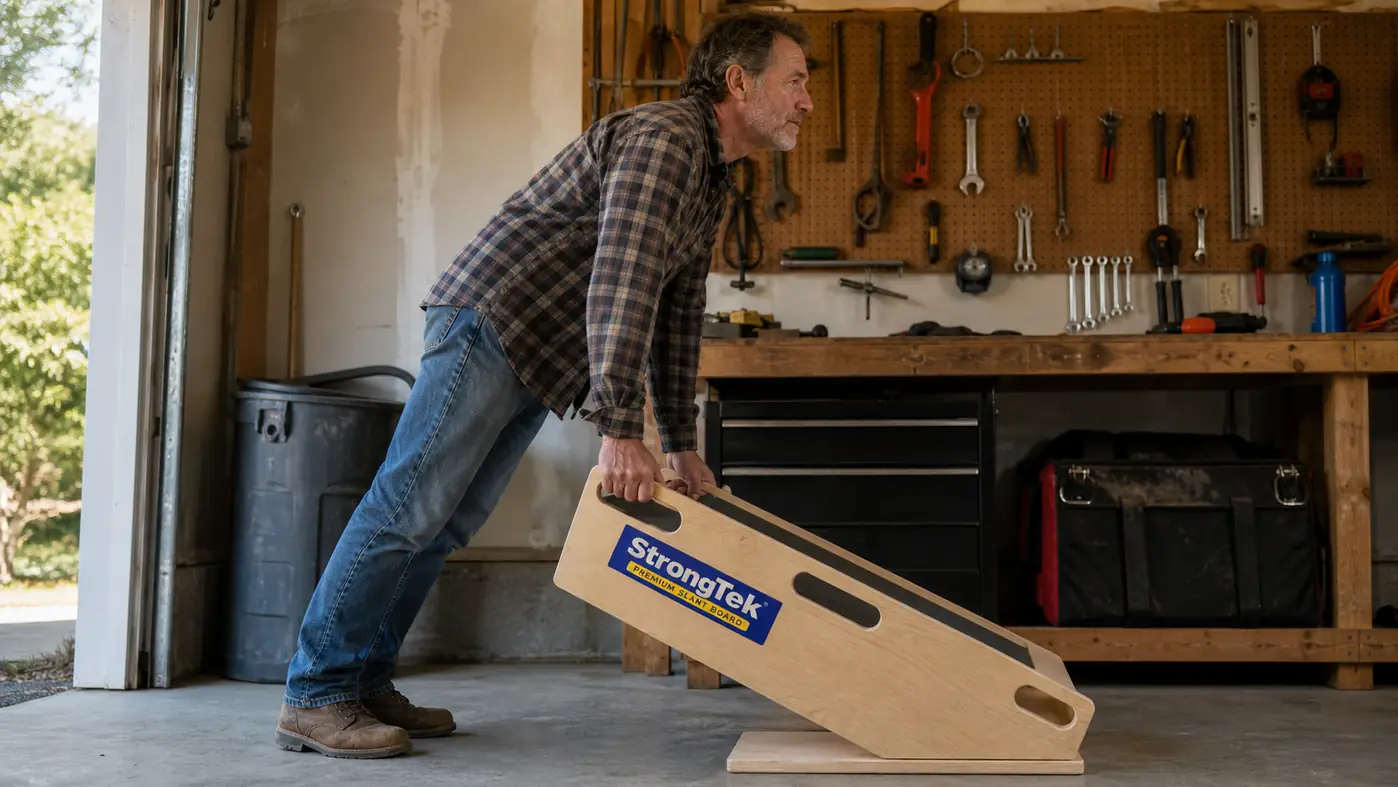
The routine is boring on purpose. I set the StrongTek board on the garage floor next to my boots, step up facing the wall, and hold the side handles while I lean into whichever angle I'm using that day. Boots go on after, not before, because the tread on my work boots doesn't grip the board's surface as well as bare feet or thin socks do. Renata thinks it's funny that I do this before coffee, but honestly the cold garage air first thing is when my calves are tightest, so it's the right time to do it even if it's the least pleasant.
I started at the lowest of the board's three fixed angles and stayed there for close to two weeks before I moved up. That wasn't caution for its own sake, it was necessity. My balance on an incline that steep was worse than I expected for a guy who spends his whole day on ladders. Odell, my training partner, is 61 and tried the same board the second week I had it, and he had the exact same wobble on day one. Neither of us is embarrassed to admit it now, but at the time it felt ridiculous that a piece of wood could make two grown men feel unsteady.
By week three I was moving between all three StrongTek angle settings depending on what the day ahead looked like. Ladder-heavy days got the steepest setting for two extra minutes. Mower days, which beat up my calves differently through vibration rather than incline work, got the middle setting and a slower pace. It sounds like overthinking a stretch, but once the habit locked in it took less mental effort than deciding what to eat for breakfast.
The Three Incline Angles, and What Each One Is Actually For
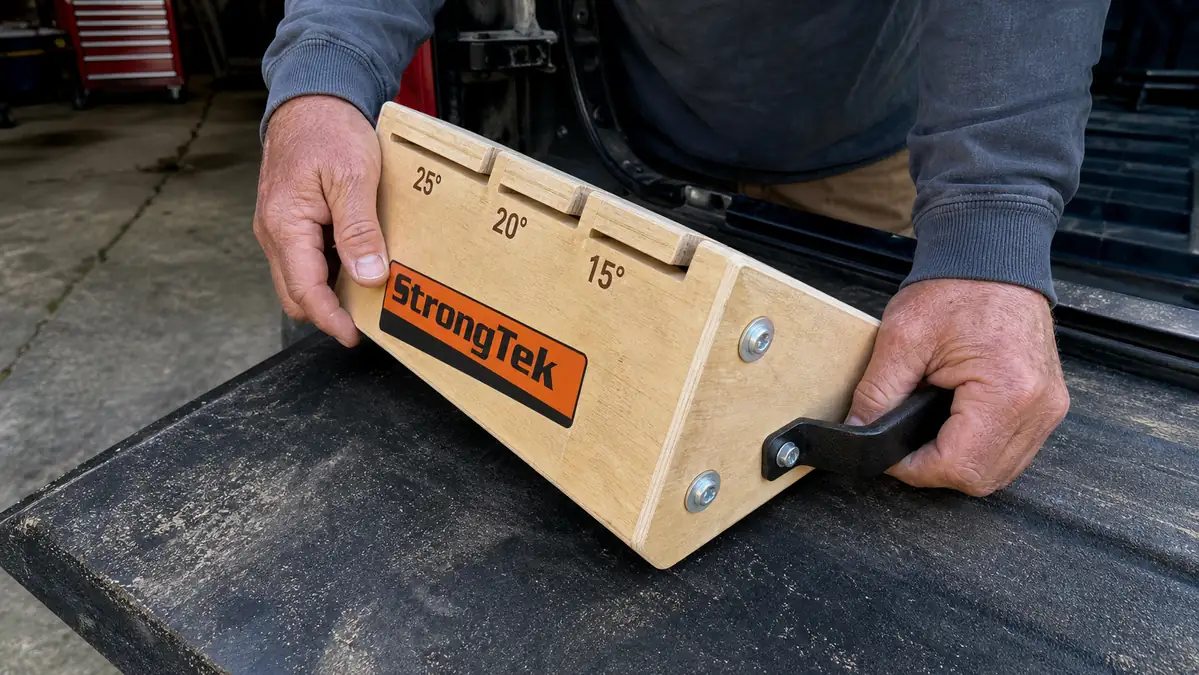
The StrongTek board doesn't have infinite adjustment, it has three notched positions you lock into with a solid wood peg, and I've come to appreciate that limitation rather than resent it. With a fully adjustable dial-style board, I'd have spent the first month fiddling with exact degrees instead of just standing on the thing. The lowest angle is where anyone should start, full stop, no matter how flexible you think your calves are. It's still enough of an incline to feel real work in the Achilles within thirty seconds.
The middle angle is where I live most mornings now. It's steep enough to get a genuine stretch through the whole back of the lower leg without turning my toes into the main event, which is a complaint I've read from other buyers about steeper incline boards in general. My training partner Odell actually prefers this same middle setting for a squat-warm-up routine his physical therapist gave him after a knee scope, which tells you the StrongTek board earns its keep beyond just calf stretching if you're creative with it. For anyone who wants the exact hold times and progression I settled on, I wrote out the whole routine on how to stretch your calves with a slant board.
The steepest StrongTek angle is the one I still respect. I only use it on days when my Achilles is genuinely tight, usually after a stretch of ladder work or a cold morning that never quite warms up. It's not a setting I'd hand a beginner on day one. If your ankle mobility is already limited, or you've had a recent Achilles issue that hasn't fully settled, that top angle can be more than your joint is ready for, and that's not a StrongTek problem, that's just physics on a steep incline.
Four Months on Concrete-Dust Garage Floors
My garage floor is not a clean gym floor. There's mower clippings, concrete dust off the trailer, and the general grime of landscaping equipment tracked through it daily. The StrongTek board's non-slip surface has held up to all of it without the grip pattern smoothing out or the wood finish getting slick, which is the thing I actually worried about most before buying. I've wiped it down maybe a dozen times in four months and it still grips the way it did in week one.
The side handles are the part I was most skeptical of when I unboxed it. They're bolted into the wood frame rather than molded plastic, and after four months of me leaning my full weight into them most mornings, there's no wobble in the hardware and no give in the wood around the bolt holes. Before I bought this one I actually looked hard at the metal-frame competitors, and I laid out exactly what I found in my comparison of the StrongTek board against the Lifepro InclineX, if you're trying to decide between wood and a metal frame.
The one wear point worth mentioning honestly is the finish on the highest-friction spot, right where the ball of my foot lands on the steepest angle. It's got a faint worn patch now, more cosmetic than structural, but if you care about it looking showroom-fresh a year in, know that daily use on a wood surface does leave a mark. The board itself has never creaked, split, or loosened at a single joint, which given how often I use it and how hard I use it, is more than I expected from something built mostly of wood.
What It Did for My Achilles and Calf, and What It Didn't
I want to be careful here because I'm not a doctor and this board didn't fix anything that needed fixing medically. What changed is how my right Achilles feels on the first ladder climb of the day. Before the StrongTek routine, that first climb had a tight, almost catching sensation for the first few rungs. Four months in, that sensation shows up maybe once a week instead of daily, usually on mornings I skipped the board the day before or slept wrong.
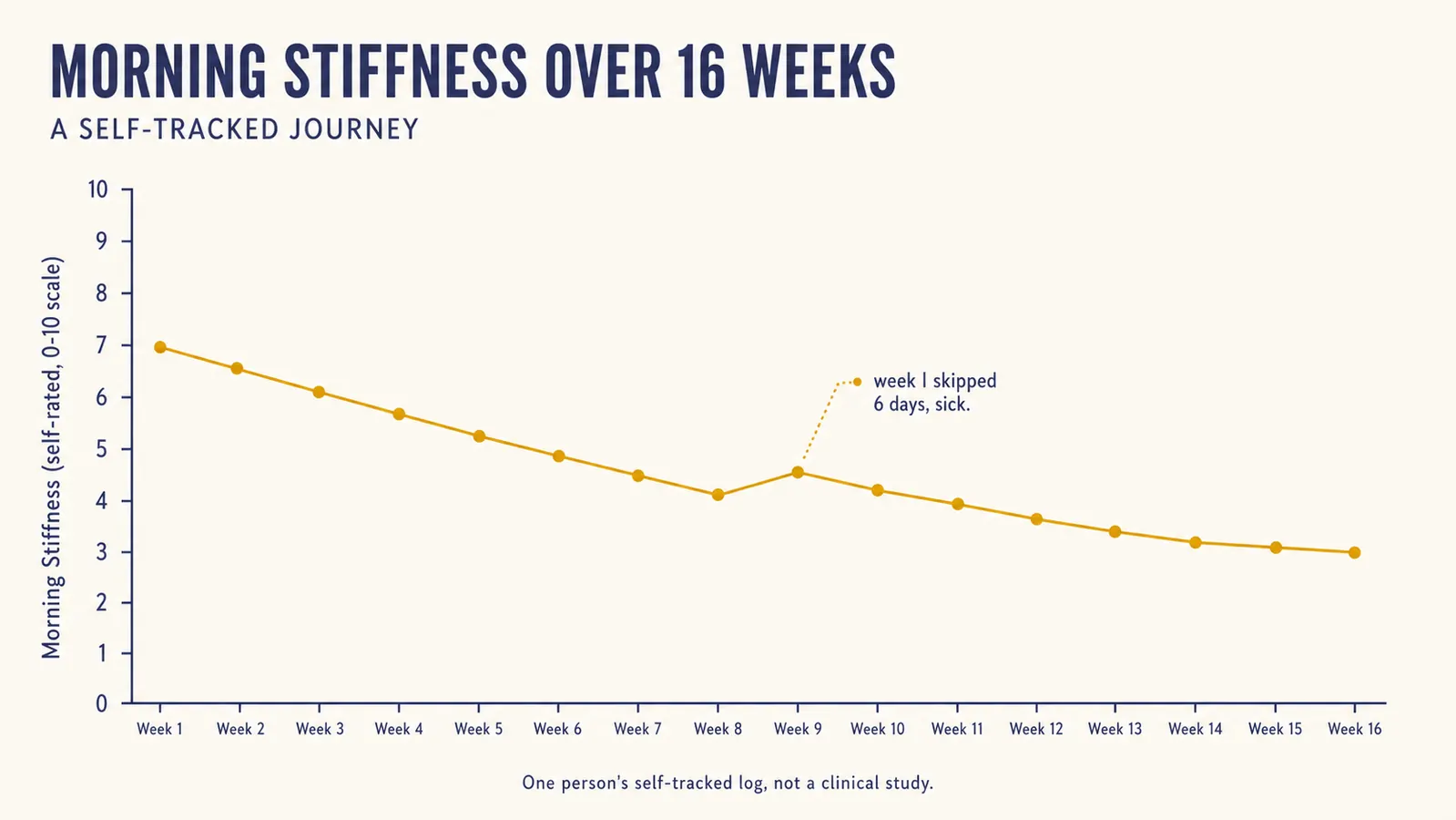
I started keeping a rough number in a notebook, rating my morning ankle stiffness zero to ten before I even step on the board, purely so I wasn't just relying on memory or wishful thinking. Week one averaged around a seven. By week sixteen it was sitting closer to a three most mornings, with one bad stretch around week nine when I was sick for six days and skipped the routine entirely, and the stiffness climbed right back up during that gap. That's not a clinical study, it's one guy's log, but it's the most honest data I have and I'd rather show you the dip than pretend the trend line was a straight shot down.
What it didn't do is make me forget about my Achilles entirely or let me skip warming up before a hard day on ladders. If your calf or Achilles pain is sharp, sudden, or getting worse rather than better, that's a conversation for a physical therapist or a doctor, not a wooden incline board, and I'd tell you that even if I didn't own one. For the general reasons a board like this helps ankle and calf mobility in the first place, I go into more of the mechanics in 10 reasons a slant board improves ankle mobility.
Alternatives I Looked at First
Before I bought the StrongTek board I tried the free version for about two weeks, which is just standing on a stack of old lumber scraps in the garage. It worked in the sense that any incline works, but the angle wasn't consistent from day to day and I genuinely worried about a scrap board sliding out from under me on concrete. I also considered a stretch strap, which is cheaper and packs flat, but it targets the stretch differently and doesn't load the ankle and calf together the way standing on an incline does.
I nearly bought a folding metal incline board instead of the StrongTek, mostly because it looked like it would store flatter against the garage wall. What talked me out of it was reading enough owner complaints about metal frames flexing under bodyweight at the steepest angle, which is exactly the angle I knew I'd want eventually. If you want the full, unfiltered rundown including the parts of ownership that annoyed me, that's covered in my honest review of the StrongTek slant board rather than this long-term piece.
What I Liked
- Solid wood construction with zero creaking, splitting, or loosening after four months of daily use
- Three fixed angles are simple enough that there's no fiddling or guesswork before you start
- Non-slip surface has held its grip through concrete dust and garage grime without needing special cleaning
- Side handles are bolted, not molded plastic, and have taken full bodyweight leaning without any give
- Doubles for more than calf stretching, my training partner uses the middle angle for a knee rehab warm-up
Where It Falls Short
- The steepest angle is genuinely not beginner-friendly, expect a real wobble the first week or two
- Only three fixed positions, no fine-tuned adjustment between them if you want a very specific angle
- The high-friction foot spot on the steepest setting shows visible wear after months of daily use
- It's a solid wood board, so it's heavier and less packable than a folding metal or foam alternative
It's not a miracle board. It's five minutes in a cold garage that made the first ladder climb of the day stop feeling like a warning.
Who This Is For
This is a good fit for anyone whose day starts with tight calves and ankles before the real work even begins, whether that's a physical job like mine, a running habit, or just getting older and noticing mornings hit different. If you want something you set up once in a garage or living room corner and never think about maintaining, the StrongTek board's total lack of moving parts is a real point in its favor. It's also a solid pick if you're the type, like me and Odell both, who'd rather test something on your own terms than sit through a guided app routine.
Who Should Skip It
If you've had a recent Achilles injury, a recent ankle sprain that hasn't fully healed, or any balance condition that makes standing on an incline risky, talk to a physical therapist before you put this in your routine, or skip it entirely. It's also not the right pick if you need something that folds flat for a small apartment or travels easily, the solid wood build is sturdy but it's not lightweight or collapsible. And if you're looking for something with adjustable, dial-in angles rather than three fixed positions, this board will probably feel limiting.
Four months later, it's still the first thing I touch every morning.
I don't recommend gadgets lightly, and this one earned its spot in the garage. See current stock and today's price on Amazon.
Amazon Check Today's Price on Amazon →