
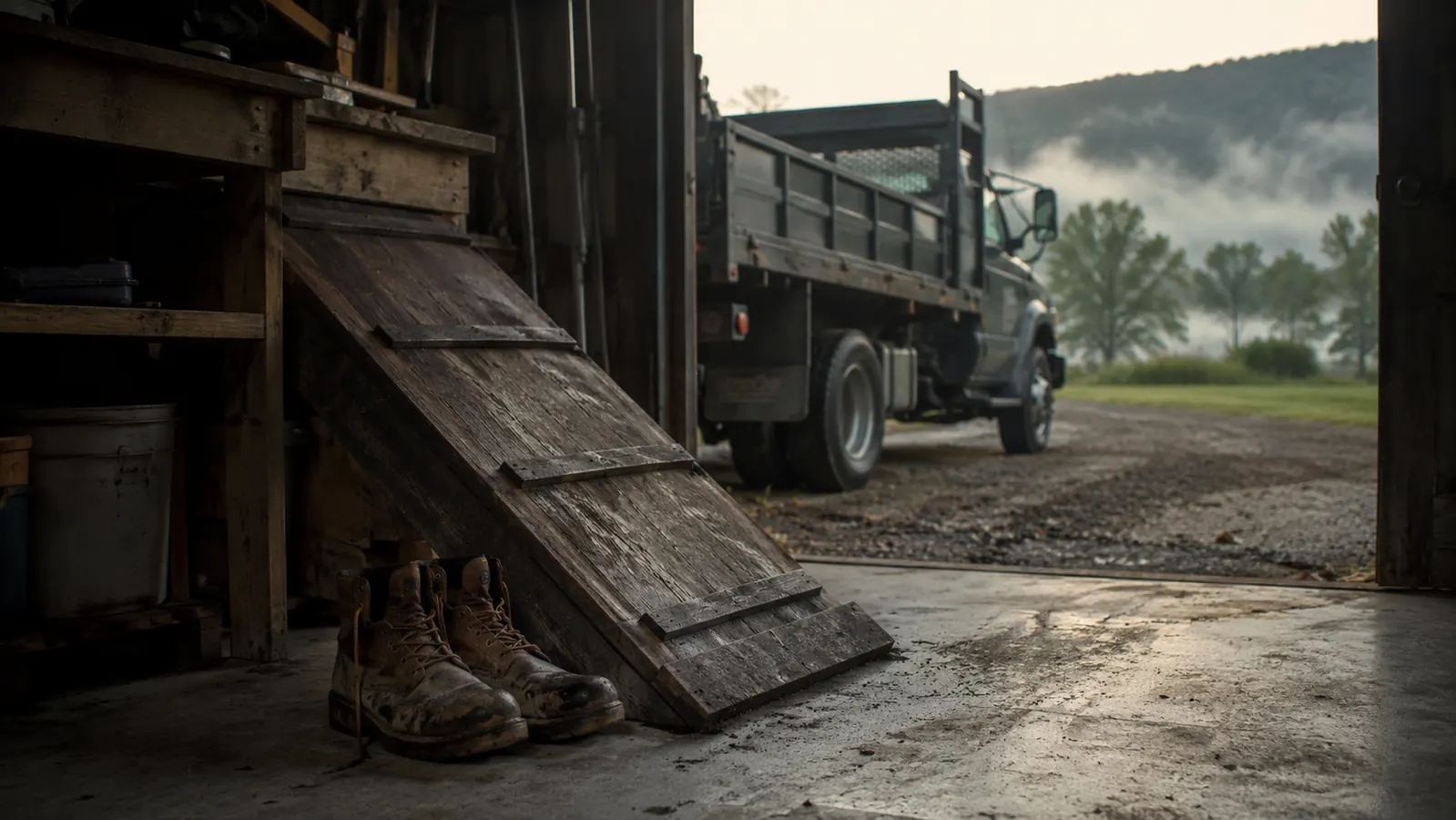
My right ankle has had an opinion about the first ladder climb of the day for years, ever since I rolled it wrong on wet grass hauling sod bags. Nine hours a day running a landscaping crew around Chattanooga doesn't leave much room for a real mobility routine, so when I started standing on a StrongTek wooden slant board for five minutes most mornings, I wasn't expecting much beyond a slightly looser calf. What actually happened is a list of specific things, not one vague improvement, and I think the list is more useful than a general "it helped" would be. Here are the ten reasons a slant board made a real difference for my ankle and calf mobility, in the order I actually noticed them.
If your ankle catches on the first climb of the day, this is worth five quiet minutes before it does.
This is the StrongTek Wooden Slant Board, the same one I stand on most mornings. Check today's price and current availability on Amazon before you decide.
Amazon Check Today's Price on Amazon →It Loads the Ankle Under Bodyweight, Not Just the Calf Muscle
A porch-step stretch mostly pulls on the calf belly. Standing on an incline with your heel down and your full weight leaning into it puts the ankle joint itself through a range it doesn't get from a passive stretch. That's the difference I felt first on the StrongTek board, a stretch down in the joint rather than just the muscle above it. Within about two weeks, the first ladder climb of the morning stopped having that tight, catching sensation through the ankle itself.
The Angle Is Repeatable, Not Guesswork
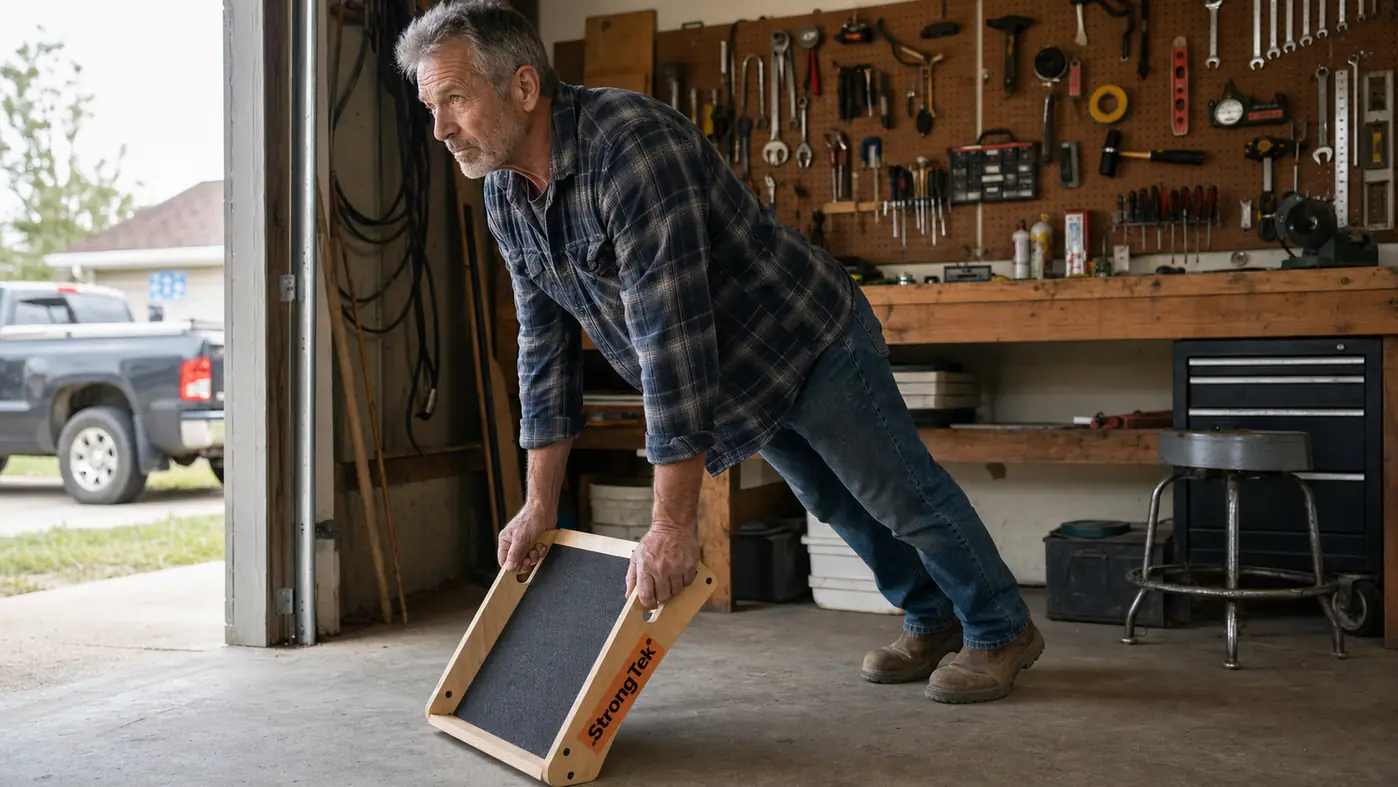
Before this board, my version of a calf stretch was leaning off a porch step or, for a rough two weeks, standing on a stack of scrap lumber in the garage. Neither one gave me the same angle twice, so I never really knew if I was progressing or just moving around randomly. The StrongTek board locks into three fixed positions with a solid wood peg, so day fourteen is the exact same angle as day one unless I deliberately move the peg. That consistency is most of why I can actually track progress instead of guessing at it.
It Targets the Achilles Specifically, Not Just the Calf Belly
My Achilles is the part that actually complains, not the meat of the calf. Standing on an incline with the heel dropped stretches the whole chain down through the Achilles in a way a seated stretch never reached for me. I go into the full story of that particular tendon and what changed for it in how a wooden slant board got me through Achilles tightness, but the short version is the first rung of the ladder stopped feeling like a warning most mornings.
It Undoes the Specific Stiffness Mower Vibration Leaves Behind
Mower days stiffen my lower legs differently than ladder days do. It's not tightness from holding a position, it's a kind of low buzzing numbness through the calf and ankle from hours of vibration through the deck. A static stretch doesn't do much for that. Standing on the StrongTek board and actually moving through a real range seems to reset something the vibration leaves behind, and I notice it most on the exact days I'd expect to need it, right after a long mowing stretch.
It Trains Balance on an Incline, Which Is Where I Actually Work
I don't stand on flat ground for a living. Ladders lean, yards slope, and a mower deck tilts on a grade. Standing on the StrongTek board's incline forces the small stabilizer muscles around the ankle to work in a way flat-ground stretching never asked them to. My training partner Odell had the same wobble I did the first week, both of us surprised that a piece of wood could make two grown men feel unsteady, but that wobble is exactly the work that carries over to uneven ground on the job.
Three Angles Let You Match the Stretch to the Day Ahead
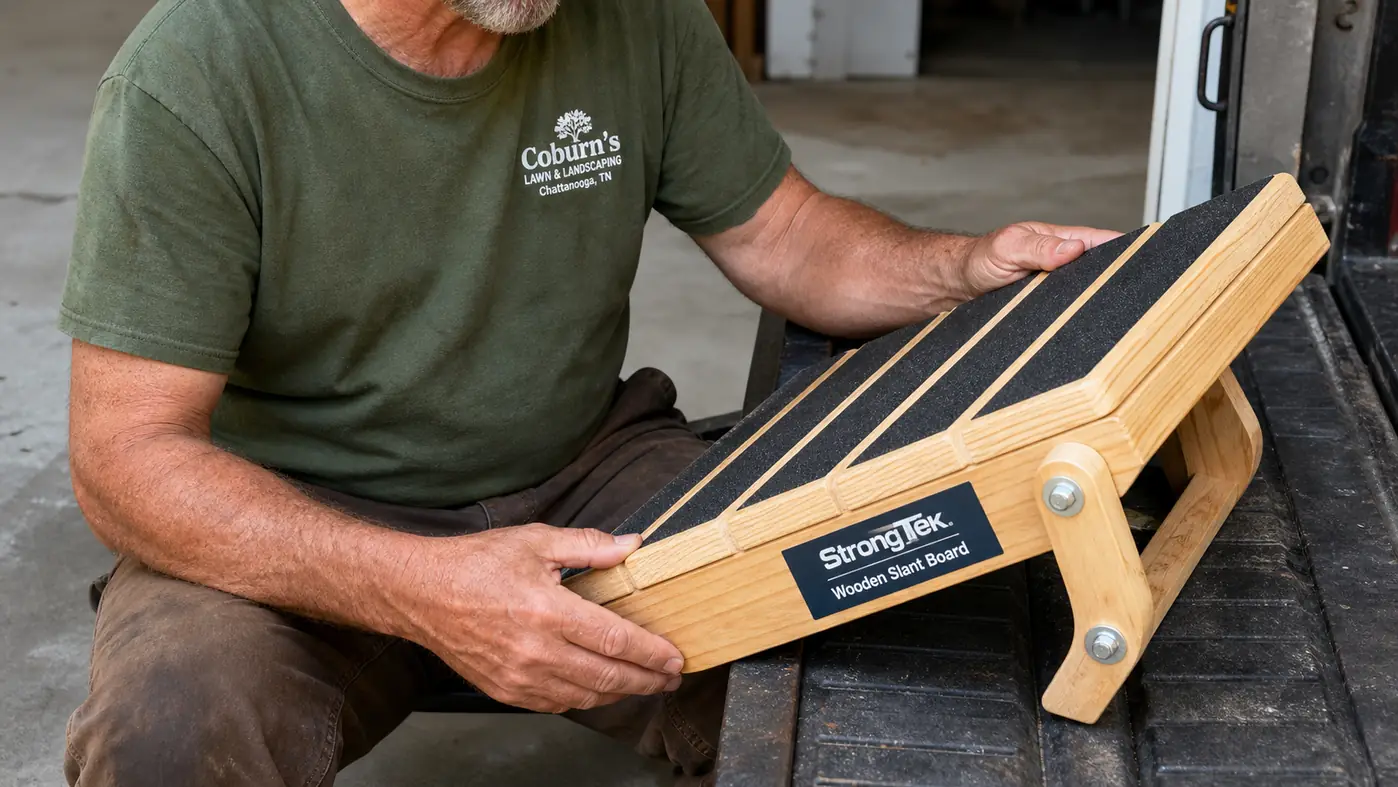
Ladder-heavy days get the steepest of the StrongTek board's three settings and a couple of extra minutes. Mower days get the middle setting and a slower pace, since it's vibration stiffness rather than deep tightness I'm working through. Having three fixed options instead of one single stretch means the routine actually matches what my ankle needs that particular morning instead of doing the same thing regardless. I laid out the full angle-by-angle breakdown in my long-term writeup at four months of daily calf stretching with the StrongTek board.
It Doubles as an Ankle-Mobility Warmup for Knee Work Too
Odell had a knee scope a while back, and his physical therapist gave him a squat warmup routine that leans hard on ankle mobility before the knee ever loads up. He uses the same middle setting on the StrongTek board for it, which tells me the ankle work here isn't isolated, tight ankles change how your knees track through a squat. If your knee troubles trace back to limited ankle range, that connection is worth asking a physical therapist about directly rather than guessing at it yourself.
Five Minutes Fits a Physical Job, Not Just a Gym Schedule
I don't have forty-five quiet minutes for a mobility routine before a workday starts. What I have is five minutes in the garage before the truck leaves the driveway. The StrongTek board sits right by my boots, no mat to unroll, no app to open, no timer to set beyond a rough feel for how long a side needs. That low a barrier is the actual reason this stuck around past the first two weeks, when most gadgets Renata warns me about end up in a bin somewhere.
A Non-Slip Surface Means You're Actually Working the Stretch, Not Fighting Your Footing
The scrap-lumber version I tried first had me worried about sliding the whole time, which meant I was bracing against a slip instead of leaning into the stretch. The StrongTek board's non-slip surface has held up through concrete dust and garage grime without smoothing out, so the effort goes into the ankle instead of into staying put. I looked at metal-frame alternatives before buying and wrote up what I found in StrongTek vs Lifepro InclineX if you're weighing wood against metal.
You Can Actually Track the Improvement Instead of Guessing at It
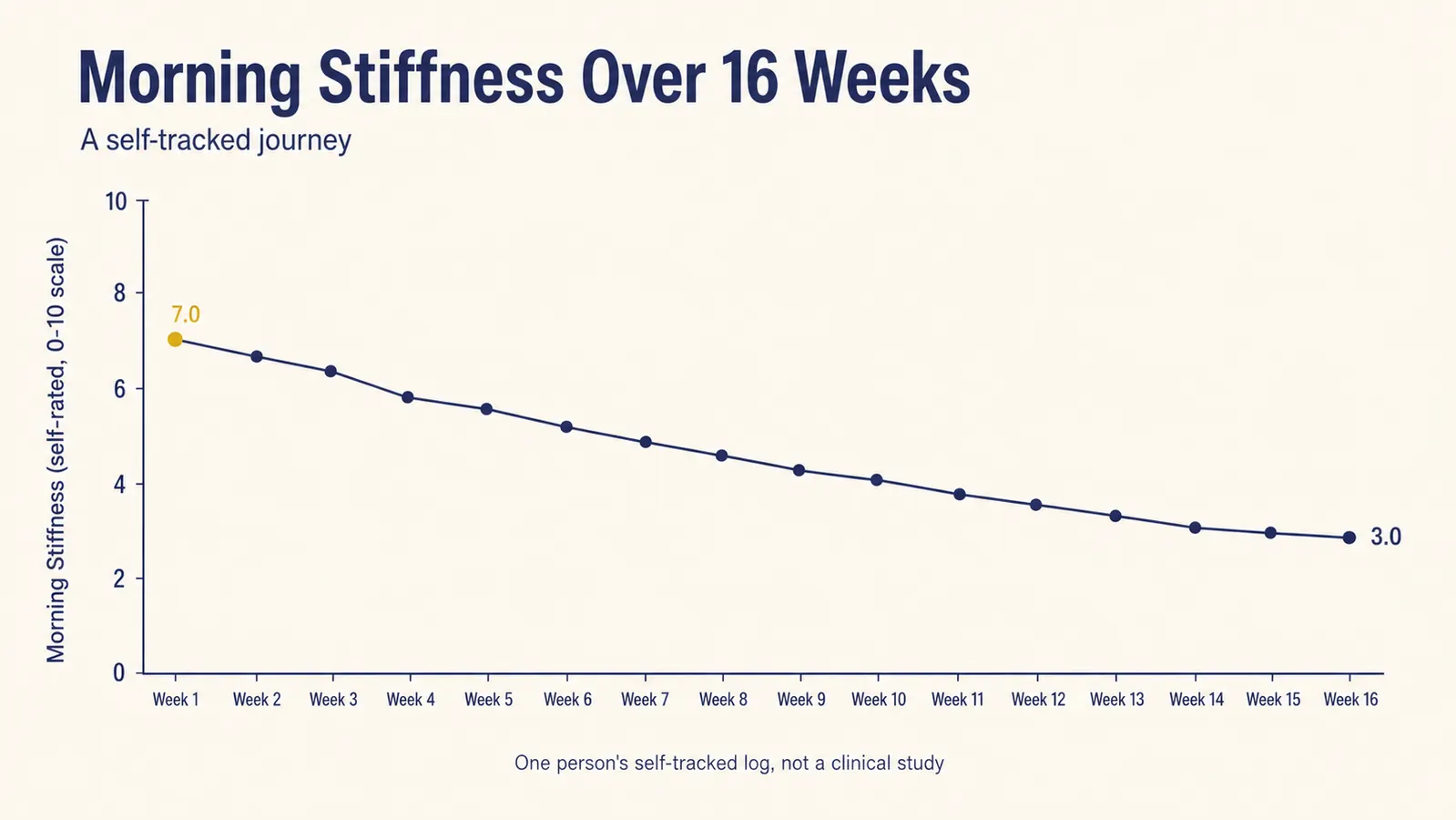
I started rating my morning ankle stiffness zero to ten in a notebook before I ever stepped on the board, mostly so I wasn't relying on memory or wishful thinking. Week one averaged around a seven. By week sixteen it was closer to a three most mornings. That's not a clinical study, it's one guy's log, but having a number instead of a feeling is what convinced me the StrongTek routine was doing something real and kept me doing it on the mornings I really didn't want to. If you want the exact hold times and progression behind that number, I wrote it out in how to stretch your calves with a slant board.
What I'd Skip
I'd skip jumping straight to the steepest angle on day one, no matter how flexible you think your calves are. I'd also skip this entirely if you've got a recent Achilles injury, a sprain that hasn't fully healed, or a balance condition that makes standing on an incline risky, that's a conversation for a physical therapist before it's a purchase decision. And if you're hoping a slant board replaces actual treatment for sharp or worsening ankle pain, it won't, it's a mobility tool, not a fix for an injury. The parts of ownership that annoyed me, including the wobble and the wear on the wood, are all in my honest review of the StrongTek slant board.
It's not a miracle board. It's five minutes in a cold garage that made the first ladder climb of the day stop feeling like a warning.
Ten reasons in, and it's still the first thing I touch every morning.
I don't recommend gadgets lightly, and this one earned its spot by the garage door. See current stock and today's price on the StrongTek Wooden Slant Board on Amazon.
Amazon Check Today's Price on Amazon →