By Thursday of most weeks, my calves feel like somebody replaced the muscle with a length of old garden hose. Nine hours a day on ladders and concrete driveways running a landscaping crew will do that, and for years the only fix I had was leaning against a porch step in my socks, which barely reached past my ankle before my heel wanted to come up off the edge. A slant board fixes that specific problem. It holds your heel down and your toes up at a fixed angle so the stretch actually loads the calf and Achilles the way it's supposed to, instead of the halfway version you get bracing against a stair edge with one foot half off it.
I've been using a StrongTek wooden slant board most mornings for about four months now, and the routine below is the one I actually settled on after getting it wrong a few different ways first. It's not complicated. Five steps, done in order, most mornings before I head out to the first job site. If you want the longer story of how this became part of my routine, I wrote that up separately in my four-month StrongTek review, and if you're still deciding whether a board like this is worth the floor space at all, I laid out ten specific reasons in this piece on ankle mobility.
Skip the guesswork on angle and hold time
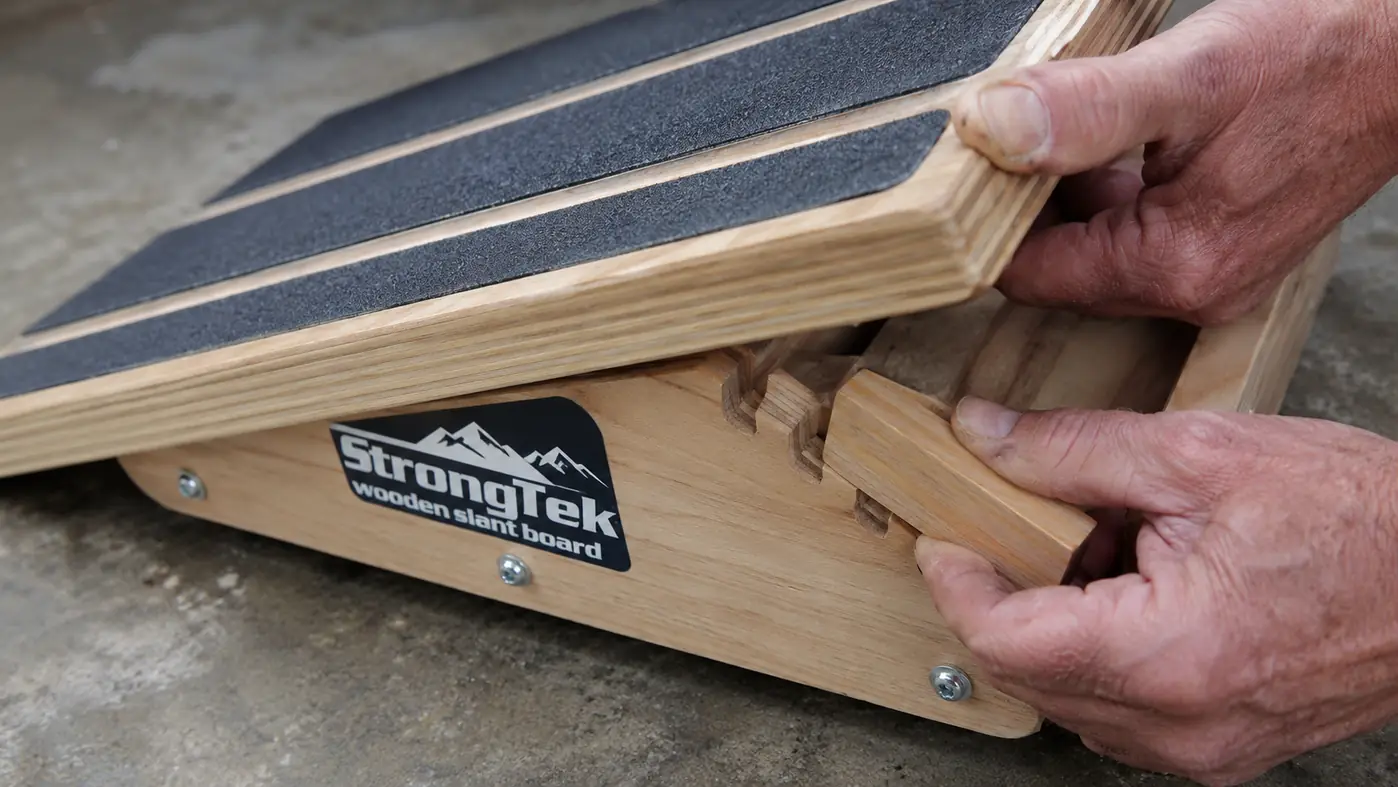
The StrongTek board is what I use for every step below, three fixed angles and a solid wood peg that locks you in so you're not fighting to hold a stretch on something wobbly.
Amazon Check Today's Price on Amazon →Step 1: Rule out anything that needs a doctor first
Before you step on any incline board, be honest with yourself about what kind of tight you're dealing with. Tight is the muscle feeling short and stiff first thing in the morning or after a long day on your feet. Hurt is sharp pain, swelling, a pop you remember, or pain that's gotten worse over the last week instead of better. A slant board is for the first kind. It is not a treatment for the second kind, and I'm not a doctor, so if that's what you're dealing with, see a physical therapist before you load an incline of any kind on it.
My physical therapist Dana said the same thing when I mentioned I'd started using the StrongTek board for my Achilles, that it's a fine tool for general stiffness but it's not a substitute for looking at an actual injury. If you've had a recent Achilles tear, a sprain that hasn't fully healed, or any balance issue that makes standing on an incline risky, that's a conversation to have with a professional first, not something to work around on your own schedule because it's inconvenient to book an appointment.
This isn't me covering myself with a disclaimer and moving on. Dana's actually the reason I know the difference between tight and hurt in the first place, from the stretch of rehab I did on my forearm after I tore it. The same logic applies to a calf or an Achilles. If pushing into a stretch makes the pain sharper rather than the muscle looser, stop, and get it looked at instead of pushing through on the theory that it'll work itself out.
Step 2: Set up barefoot, at the lowest angle, every single time you start
I made the mistake of stepping onto the steepest setting the first morning I owned mine, mostly because I figured four decades of tight calves meant I could handle it. I nearly went off the back of the board reaching for a side handle that wasn't where my hand expected it to be. Start at the lowest of the StrongTek board's three fixed angles, every time, even once you've built up to steeper settings on other days. It's not about ego, it's about your foot finding a stable position before you lean into anything at all.
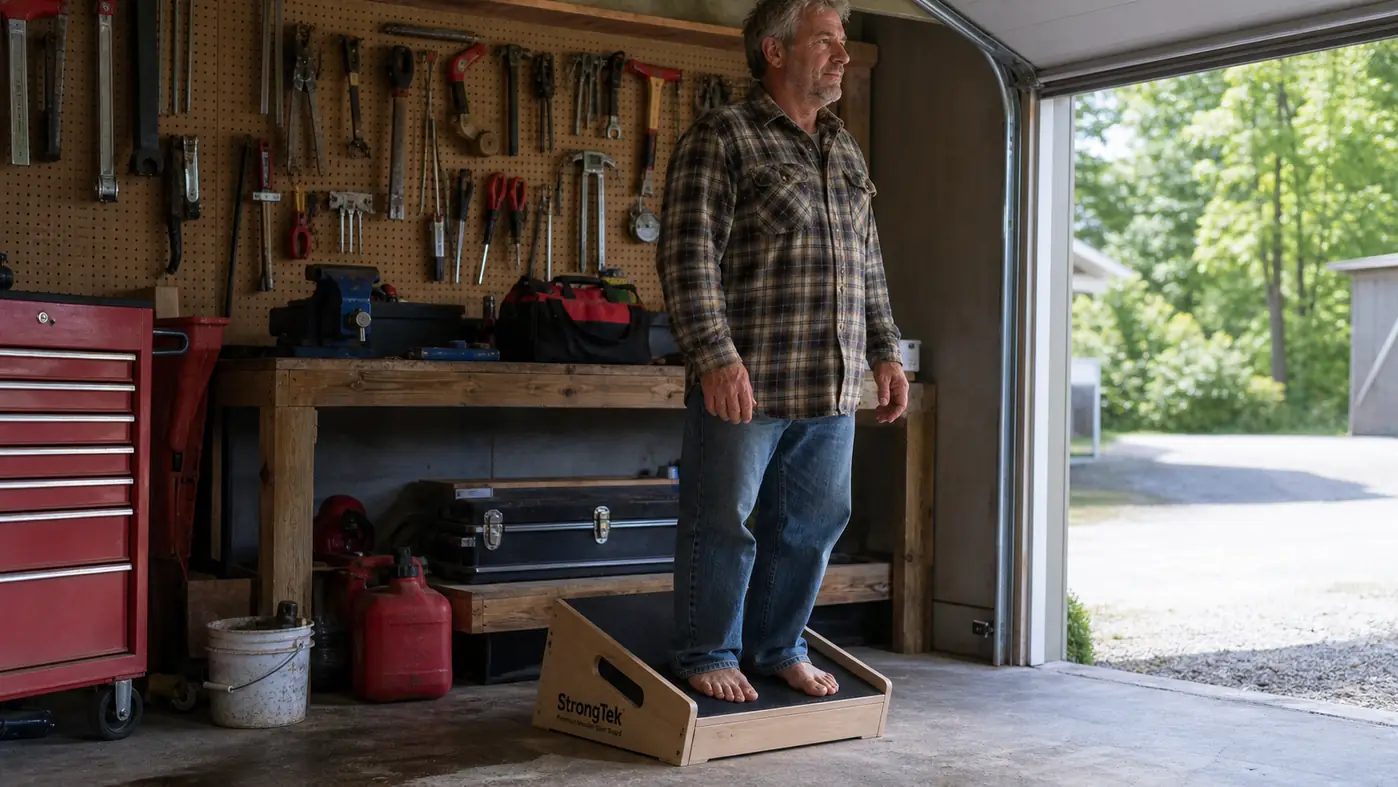
Do this barefoot or in thin socks, not work boots. I tried it in boots once to save the thirty seconds of changing shoes, and the tread grabbed unevenly on the wood and nearly rolled my ankle sideways before I'd even leaned forward. Step up facing the wall, heels flat on the board, toes pointed up the incline, and take hold of the side handles before you commit any weight forward. The handles on the StrongTek board are bolted into the frame rather than molded plastic, and that matters here, they don't flex when you actually lean on them.
Give yourself a few sessions just getting comfortable with the setup before you worry about anything else. Standing still and steady on an angled wood surface is its own small skill, and rushing that part is exactly how people end up reaching for a handle that isn't quite where they expected it, the way I did that first morning.
Step 3: Hold thirty seconds a side, breathe, and do three to four rounds
Once you're set up at the lowest angle, lean your weight forward gently until you feel the stretch through the back of your calf and down toward your Achilles. Hold that for about thirty seconds, breathing normally, not holding your breath the way I did the first few sessions out of sheer concentration on staying upright. Step down, shake the leg out, and repeat for three to four rounds total. I do this on both legs even on days when only my right Achilles is complaining, because an imbalance you don't address tends to show up somewhere else eventually, usually the other side.
Thirty seconds feels short at first and then feels long by round three, which is normal. Don't bounce into the stretch or force extra range by yanking on the handles, that's how you turn a mobility routine into a strain. The point of the StrongTek board is that the angle does the work for you, you're just supplying steady, controlled weight and patience while it holds the position for you.
I keep a rough count in my head rather than watching a clock, one Mississippi through thirty, which is close enough for this. It doesn't need to be precise to the second. What matters more is that you're doing the same rough hold, the same rough number of rounds, most mornings, rather than three minutes one day and thirty seconds the next depending on how rushed you are.
Step 4: Progress the angle over weeks, not days
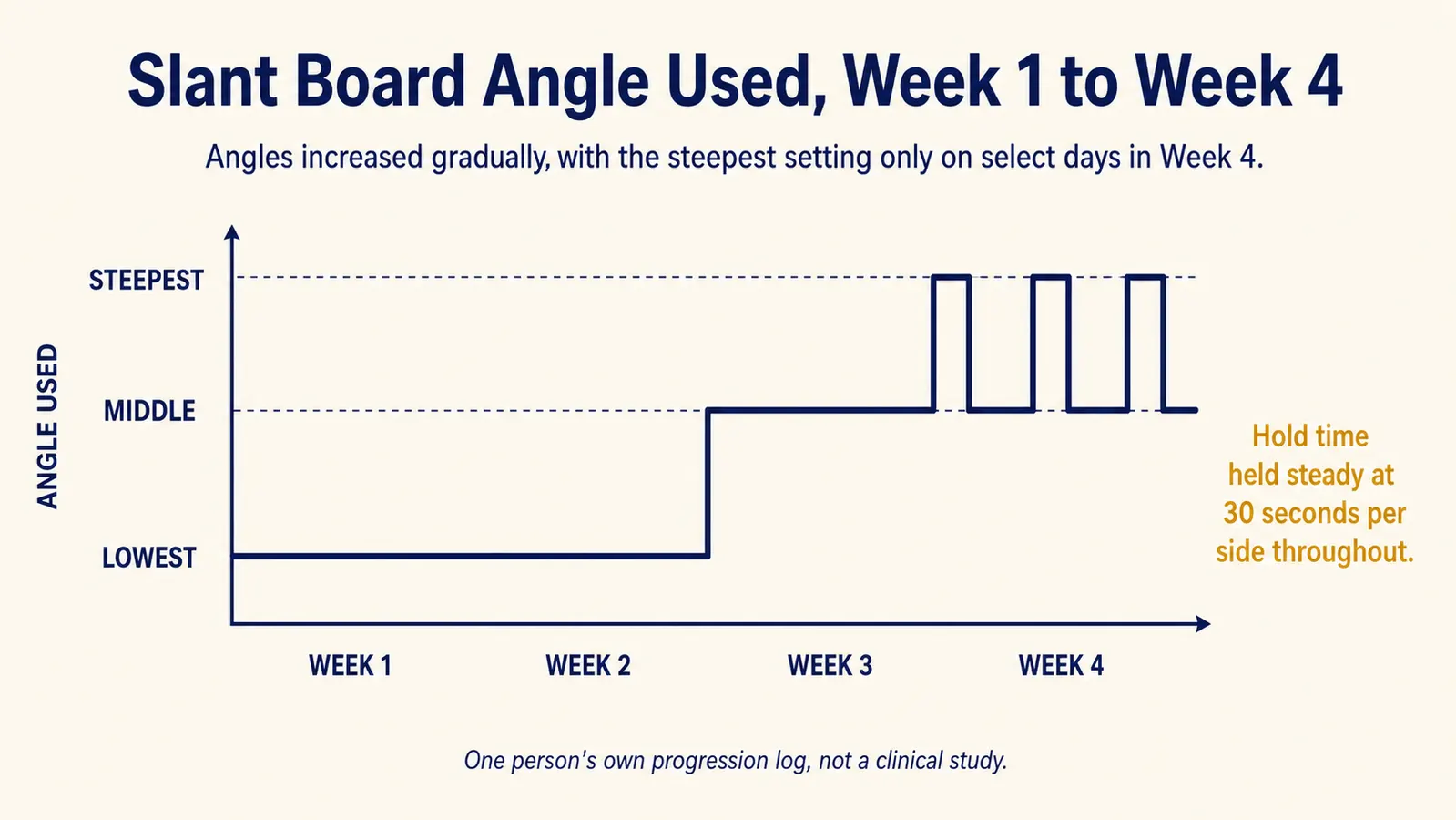
I stayed at the lowest of the three StrongTek angle settings for close to two weeks before I moved up, and that wasn't caution for its own sake, it was necessity. My balance on an incline that steep took real time to build, and my calf was sore in a new spot for the first several sessions in a way that had nothing to do with the Achilles tightness I was trying to fix in the first place. By week three I was moving between all three settings depending on what the day ahead looked like, the middle angle for a normal morning and the steepest one saved for days after a stretch of ladder work when my Achilles genuinely needed more.
Resist the urge to chase the steepest angle just because it's there. The middle setting is where I live most mornings now, steep enough to get a real stretch through the whole back of the lower leg without turning my toes into the main event, which is what happens if you go too steep too soon and your foot starts compensating instead of your calf actually lengthening. If you're comparing boards with more adjustment options, I put a wooden three-notch board up against a folding nine-position one in this comparison, and the angle progression logic holds either way.
A rough timeline that worked for me, without pretending your body will move on the exact same schedule: two weeks at the lowest angle, a week or two mixing lowest and middle, and only after that reaching for the steepest setting, and even then only on the mornings that actually call for it rather than every single day out of habit.
Step 5: Anchor it to something you already do, not a separate appointment
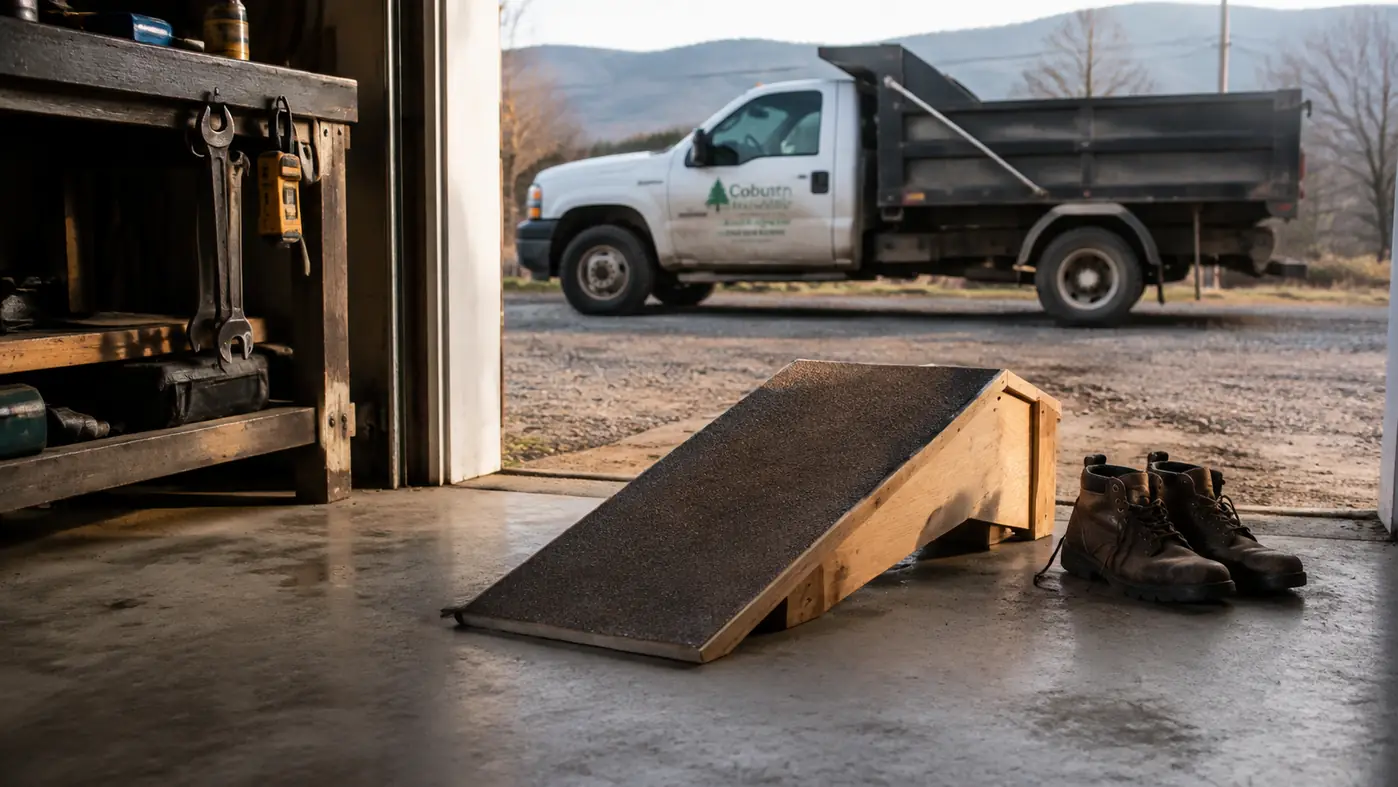
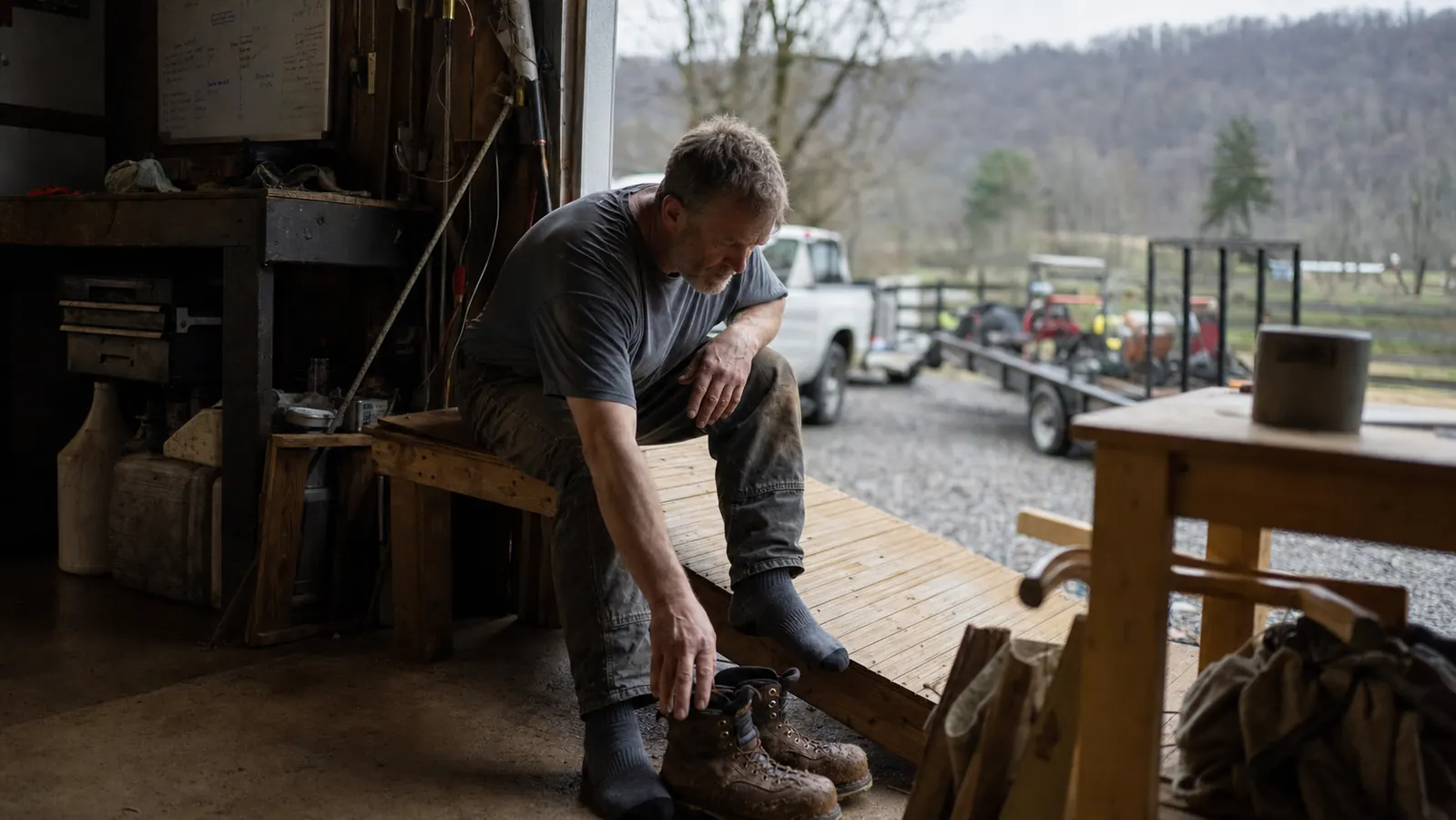
The only reason this routine survived on my schedule is that I stopped treating it like a separate task. The StrongTek board sits in the same spot in my garage every morning, right next to where my boots go, so stepping onto it happens before the boots go on, not as something I have to remember later in the day when I'm too tired to bother with it. If you've got a specific pain point driving this, mine was Achilles stiffness that used to seize up on the first ladder rung of the day, I wrote the fuller story of that one in this piece.
Odell, my training partner, ties his to the end of his own weight session instead of the start of his workday, and it works for him just as well. The order doesn't matter as much as the anchor. Pick a moment that already happens every day, right after you wake up, right before you put your boots on, right after you brush your teeth, and put the board there instead of hoping you'll remember a floating routine with no trigger attached to it at all.
What Else Helps
A slant board is doing one job, it holds a consistent angle so your calf and Achilles get loaded the same way every time instead of the half-stretch you get improvising against a stair. It's not the whole picture. Warming up with a few minutes of easy walking before you stretch cold helps, and so does not skipping the routine on your sorest mornings, which is exactly when it's tempting to skip it. I've also found that changing out of boots the second I'm done working, rather than sitting in them another hour, keeps my calves from tightening right back up by evening.
None of that is complicated advice, but consistency does more here than any single trick. A cheap incline board used inconsistently will do less for you than a good one used every day, and the reverse is true too, a solid board like the StrongTek only helps if it actually gets stood on. If you want the fuller honest version of what living with this specific board is like, warts included, I wrote that one up separately in this piece. And if you want a broader list of what an incline board specifically changes over time, I covered ten of those in this article.
The board didn't fix anything overnight. It just gave my calf the same honest angle every single morning, and eventually that added up.
Same angle, same routine, every morning
The StrongTek wooden slant board is the one I still reach for before every job site morning, three fixed angles and side handles that don't flex when you lean into them.
Amazon Check Today's Price on Amazon →