
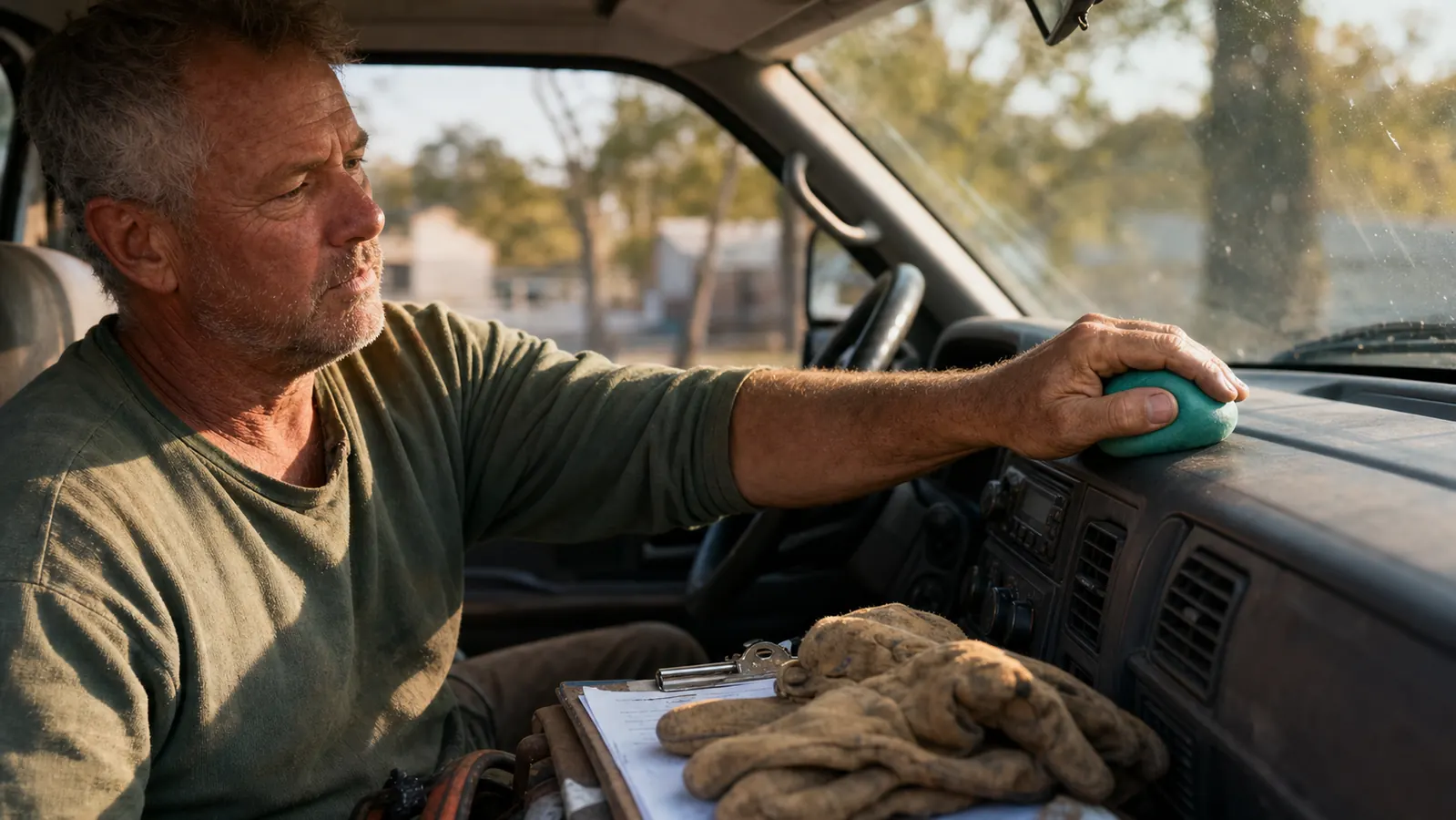
Nobody selling therapy putty tells you it ends up ground into the seams of your work pants, or that the tub cracks if you leave it in a cold truck cab overnight. I found out both inside the first two weeks with a FlintRehab four-pack sitting in my center console. I'm Wes Coburn, I run a landscaping crew out of Chattanooga, and my hands take a beating that has nothing to do with a gym, string trimmer vibration all morning, gripping loppers and pruning shears all afternoon, hauling wet mulch bags off the trailer. Renata, my wife, is a nurse, and she's the one who put this stuff in my hands after I complained my forearms felt like a fist by Thursday. This isn't the long-term review where I walk through four months of routine day by day. This is what actually surprised me, good and bad, once real work-callused hands got involved instead of a clinic chair.
The listing makes it sound tidy. Four resistance levels, color-coded, three ounces each, snap the lid and go. What the bullet points don't mention is how differently those four colors behave once you're using them with hands that already have calluses and dirt worked into the knuckles, or how the softest tub turns into something closer to taffy sitting in a hot glovebox in July. There's real good in FlintRehab's putty, and I'll get to it, but I want to start with what would have changed how I used this stuff those first few weeks if somebody had just told me straight.
The Quick Verdict
A legit grip and forearm tool for truck-cab and couch use, just budget for residue on fabric and don't trust the color labeling as a hard number.
Amazon Check Today's Price →By Thursday your forearms feel like fists too? Here's what actually changed that for me.
FlintRehab's 4-pack gives you four honest resistance levels in one order, so you're not restocking a single tub every few weeks or guessing which firmness to buy first. See today's price and current stock on Amazon.
Amazon Check Today's Price on Amazon →How I've Used It
My routine isn't complicated. The tub rides in my truck console, and I work a color for five or ten minutes between job sites while I'm waiting on Odell to finish loading the trailer, or on the couch at 8pm with my boots already off. I started on yellow, the softest one, because my grip was worse than I wanted to admit after a full day on the mower. Within about three weeks I'd moved to red, then green by month two. I never made it to black, the firmest one in the pack, and I'll explain why in a minute, it isn't the reason you'd expect.
If you want the day-by-day version of that progression, dosage-style, I laid it all out in my FlintRehab therapy putty review after four months of daily use. This piece is different on purpose. I'm not repeating the week-by-week log here. I'm telling you what annoyed me, what surprised me, and what made me set the tub down for a week, because that's the part most reviews skip on their way to the five-star ending.
The Four Colors Aren't as Consistent as They Look
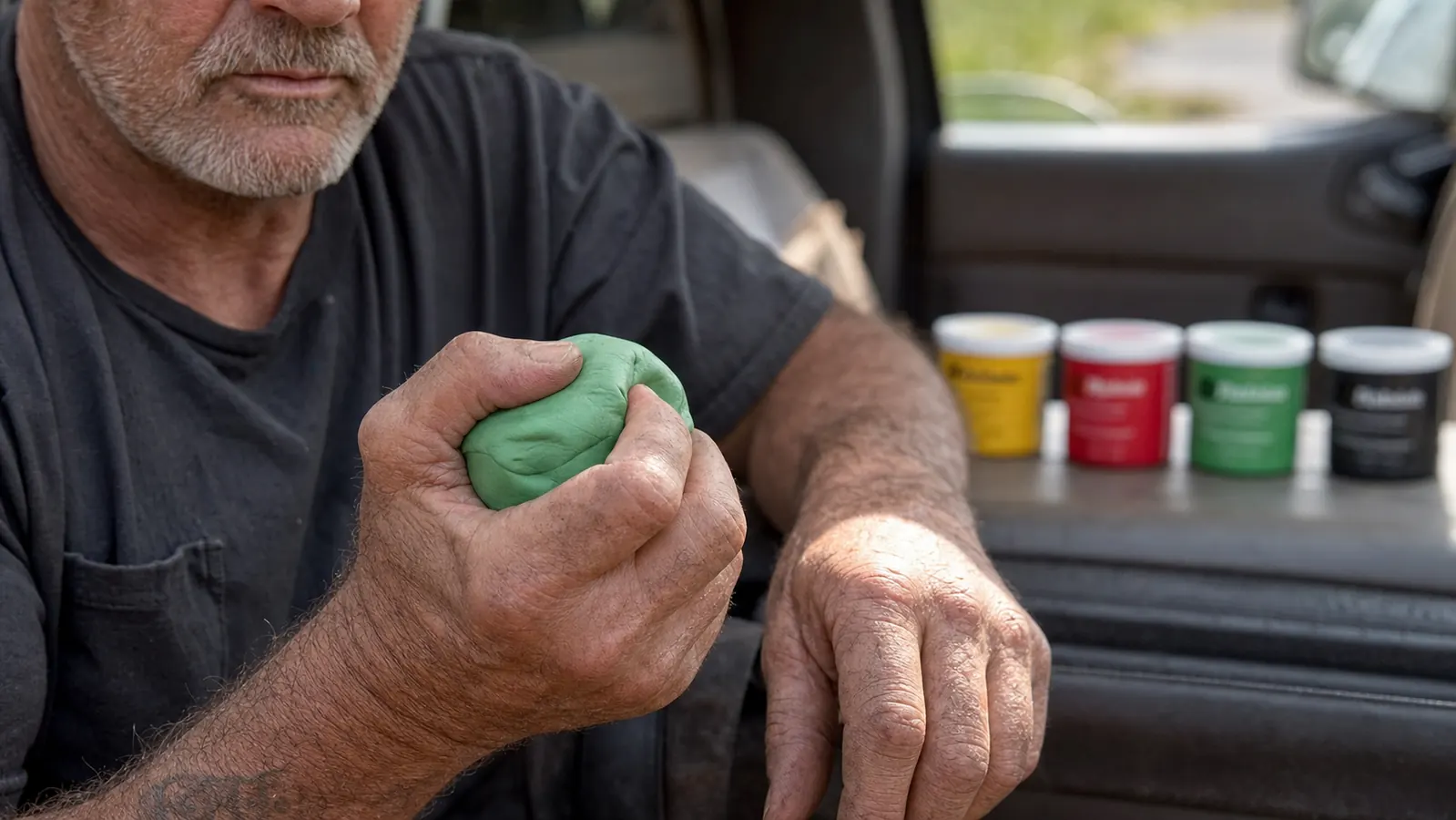
Here's the first thing nobody mentions. Odell, my training partner, bought his own FlintRehab pack about six weeks after I did, same listing, same four colors. We compared green side by side on his tailgate one afternoon, and his felt noticeably softer than mine, more like my red. Neither tub was defective exactly, they just weren't identical. If you're counting on green always meaning the same exact resistance so you can track real progress, know that batch to batch there's some drift. It didn't ruin the product for me, but I stopped trusting the color as a hard number and started trusting my own forearms instead.
The other thing the listing doesn't say plainly is that resistance shifts with temperature more than you'd expect. Left in a cold truck overnight, yellow got stiff enough that it felt closer to red the next morning. Left in a hot glovebox on a July afternoon, that same yellow went soft and sticky, almost unusable for a real grip set. Therapy putty is a rubber-and-silicone compound, and like anything in that family it responds to heat and cold. If your plan is truck-cab use like mine, keep it somewhere that doesn't bake or freeze, or you'll spend half your session waiting for it to come back to a normal feel.
What Nobody Tells You About the Mess
Therapy putty leaves an oil residue on your hands. That's normal and it's part of how the compound stays workable instead of drying into a hard lump. What surprised me is how much it transferred onto everything else. My steering wheel had a faint sheen on it within a month. A pair of khakis I wore to a customer walkthrough came home with a greasy smudge on the thigh where I'd set the tub down on my leg without thinking. Our dog Gus found an open tub left on the porch table and turned it into confetti across the deck boards before Renata caught him mid-chew.
The tubs themselves are decent but not indestructible. One cracked clean across the lid after a night in a cold glovebox, and I lost close to a third of that color to lint and gravel before I noticed the crack. None of that is a defect, exactly, it's just what nobody puts in the product photos. If you want the exercises I actually run with each resistance level once the putty's back to a workable temperature, I wrote those up separately in how I strengthen my forearms with therapy putty, step by step, no guesswork.
Is FlintRehab Worth It Over the Cheaper Stuff
I did buy a generic therapy putty off Amazon once, before this, one of those unbranded four-packs with barely any labeling on the tubs. It was fine for about three weeks, then it started crumbling at the edges and lost most of its stretch, more like dried modeling clay than putty. FlintRehab putty has held its texture noticeably longer, going on four months now with the green tub still workable, not falling apart at the edges the way that cheaper set did within a month. That's really the whole case for paying more for a name brand here, it's not that the cheap stuff doesn't work at all, it's that it doesn't last, and you end up buying it twice.
I'll be straight that I can't tell you FlintRehab's putty is chemically different from the no-name version in any real sense, I'm not a lab, I'm a landscaper with sore forearms. What I can tell you is the FlintRehab tubs didn't dry out sitting in a hot truck the way the generic set did by week four, and the color consistency within a single order was better, even if it drifted a little order to order the way Odell and I found out on his tailgate. For four resistance levels in one box that actually hold up to truck-cab conditions, it earned the extra cost in my experience.
There's also a shelf-life difference nobody mentions upfront. Four months in, the yellow tub, the one I use least now that I've moved past it, has stayed perfectly workable sitting mostly untouched in a kitchen drawer. The green tub, the one getting daily use in the truck, shows more wear, a slightly grayer tint from picking up dust and lint off my hands over and over. That's normal wear, not a defect, but it means the tub you use most is the one that'll look the roughest first, which threw me off when I compared mine to Odell's newer set and assumed something was wrong with the compound instead of just plain mileage.
The 3-Ounce Tubs Run Out Faster Than You'd Think
One thing the four-pack format doesn't advertise well is that you don't use all four tubs evenly. I burned through yellow fast because it's the easy one you start on, then barely touched red and green day to day once I'd moved past them, except for the occasional lighter session. FlintRehab sells the pack as four resistance levels, and that's accurate, but in practice it behaves more like one workhorse tub, whichever resistance you're currently living in, plus three backups you dip into once in a while. Three ounces sounds like plenty until you're working it daily for four months straight. My most-used color is visibly smaller than when I started, thinner, with more of it worked into the seams of that truck console than I'd like to admit. If you're buying this expecting four tubs that last equally long, know your daily-use color will need replacing well before the other three do.

Where It Actually Helped After Four Months
Now the fair part, because an honest review has to give credit where it's due. My grip endurance on a full mowing day is better than it was in the spring. I used to lose feeling in my fingertips by the third hour on the trimmer, and that's mostly gone now. FlintRehab putty is quiet enough to work in the truck without Odell asking what I'm doing, unlike a squeeze ball that squeaks with every rep, and it's genuinely satisfying to dig into after a long day, more like a habit than a chore. Four months in, I still reach for it most evenings without having to talk myself into it.
There's a real reason this stuff shows up in actual occupational therapy clinics and not just Amazon listings padded with stock photography, FlintRehab makes rehab equipment as its core business, not a side hustle bolted onto a generic import. I go into the mechanics of why putty work translates to grip strength in 10 reasons therapy putty rebuilds grip strength, if you want the fuller case for why this isn't just a fidget toy with a clinical label slapped on it.
What Else I Tried, and Why I Came Back
Before settling on this, I tried a basic grip trainer with adjustable tension springs, and a Thera-Band hand exerciser Renata brought home from a hospital supply closet. Both work the closing motion fine, but neither one does anything for finger extension, pinch strength, or the light finger-walking exercises that actually loosened my hands up on a cold morning. I put FlintRehab putty head to head against that Thera-Band hand exerciser in more detail elsewhere, but the short version is the putty does more with one tub than the exerciser does with its whole setup.
My own wrist recovery story, working my grip back after the brace came off a torn forearm, covers the injury-specific side of this that this review deliberately sets aside. Mine is wear and tear from a physical job, not a recovery from a specific injury, and it's worth being honest that those are two different use cases, even though the same tub of putty works for both.
What I Liked
- Four resistance levels let you actually progress instead of guessing at firmness
- Quiet enough to use in a truck cab or in front of the TV without a scene
- Works finger extension and pinch grip, not just a closing squeeze
- Made by a company that builds actual rehab equipment, not a novelty brand
- Held its texture for months where a generic putty crumbled within weeks
Where It Falls Short
- Oil residue transfers to hands, fabric, and steering wheels
- Resistance isn't perfectly consistent tub to tub or order to order
- Gets stiff in cold, sticky in heat, so storage matters more than you'd think
- Tubs crack if left somewhere too cold overnight
- No real instructions on reps or progression timing included in the box
It's not a miracle for my hands. It's just the one thing sitting in my truck console that actually gets used, oil residue and all.

Who This Is For
If your hands and forearms take a daily beating from tools, steering wheels, or repetitive gripping, and you want something low-key you can work in a truck seat or on a couch without setting up anything, FlintRehab putty earns its spot. It's especially good if you want to work fingers individually, pinching and extending, not just closing a fist around something. Guys like Odell and me, who aren't in a gym most days and aren't going to carve out 45 quiet minutes for anything, this fits the actual shape of a workday better than most grip tools I've tried. It also works fine as plain stress relief on a rough day, even without a specific forearm complaint, since kneading something with real resistance is oddly calming after a long shift.
Who Should Skip It
If you're dealing with an actual injury, a fracture, a recent surgery, or anything beyond garden-variety overuse stiffness, talk to a doctor or a physical therapist before you build a routine around a tub of putty from Amazon. This isn't medical equipment prescribed specifically for you, it's the same general product clinics use as one tool among several. And if you can't stand the idea of oil residue on your hands, or you're not willing to store it somewhere temperature-stable, you'll spend more time annoyed at the mess than working your grip. It's also not the right buy if you're hoping all four tubs will last a full year at daily use, since the color you actually reach for will run thin well before the other three.
Four months in and the mess is real, but it's still the tub I reach for after every mowing day.
FlintRehab's 4-pack covers the whole progression from a weak grip to a strong one in one order, mess, storage quirks, and all. See current pricing and stock on Amazon.
Amazon Check Today's Price on Amazon →